Why Are Winter Outdoor Activities Great for Your Body and Mind?
Embracing the cold doesn't mean sacrificing fitness or mental well-being. Engaging in winter sports—from snowshoeing to cross-country skiing—provides a unique, full-body workout that is highly effective at building strength, improving cardiovascular health, and combating Seasonal Affective Disorder (SAD). By combining physical exertion with exposure to natural light, these activities help boost mood, regulate sleep cycles, and provide an invigorating sense of accomplishment.
What Are the Physical Fitness Benefits of Winter Sports?
Winter sports are far more comprehensive than a typical gym workout because they require constant balance adjustments and dynamic movements across challenging terrain. They engage multiple muscle groups simultaneously, offering varied benefits:
🎿 Skiing and Snowboarding: Full-Body Powerhouse Workouts
These activities provide intense cardiovascular training while building powerful lower body muscles.
- Cardiovascular Endurance: The continuous movement, especially when traversing uphill or maintaining speed, elevates your heart rate significantly, improving lung capacity and stamina.
- Lower Body Strength: Both sports intensely work the quadriceps, hamstrings, glutes, and calves. The constant flexing and absorbing of impact builds powerful leg muscles.
- Core Stability: Maintaining balance on uneven snow requires continuous engagement of your core (abdominal and back muscles). This develops deep stabilizing strength crucial for overall physical health.
- Balance and Coordination: Learning to carve turns or navigate slopes improves proprioception—your body's awareness in space—and enhances coordination.
🚶 Snowshoeing: Low-Impact, High-Reward Cardio
Snowshoeing is an excellent entry point because it provides a robust workout with reduced joint impact compared to running on hard surfaces.
- Cardiovascular Health: It offers a sustained aerobic workout as you traverse varied terrain and climb hills.
- Lower Body Strength: The resistance provided by the snow strengthens your legs, building endurance without excessive strain.
- Accessibility: Because it is low-impact, it is ideal for individuals with joint pain or those returning to fitness after injury.
How Do Winter Activities Help Combat Seasonal Affective Disorder (SAD)?
The mental health benefits of outdoor activity are profound and scientifically supported. For those struggling with SAD—a form of depression linked to reduced sunlight during winter months—outdoor exercise is a powerful natural remedy.
- Natural Light Exposure: Spending time outside, even on cloudy days, helps regulate your body's circadian rhythm (sleep-wake cycle). This exposure signals to the brain that it is daytime, which is crucial for mood stability.
- Vitamin D Boost: Sunlight is the primary source of Vitamin D, a nutrient essential for regulating serotonin and mood. Outdoor activity maximizes this natural intake.
- Endorphin Release: Physical exertion triggers the release of endorphins—natural mood elevators that help reduce stress and anxiety.
- Nature's Calming Effect: Studies show that time spent in nature lowers cortisol levels (the primary stress hormone), providing a restorative effect on the mind.
What Gear Do I Need to Stay Warm and Safe?
Safety is paramount when engaging in cold weather sports. Proper preparation involves both clothing and planning.
🧥 Mastering the Layering System
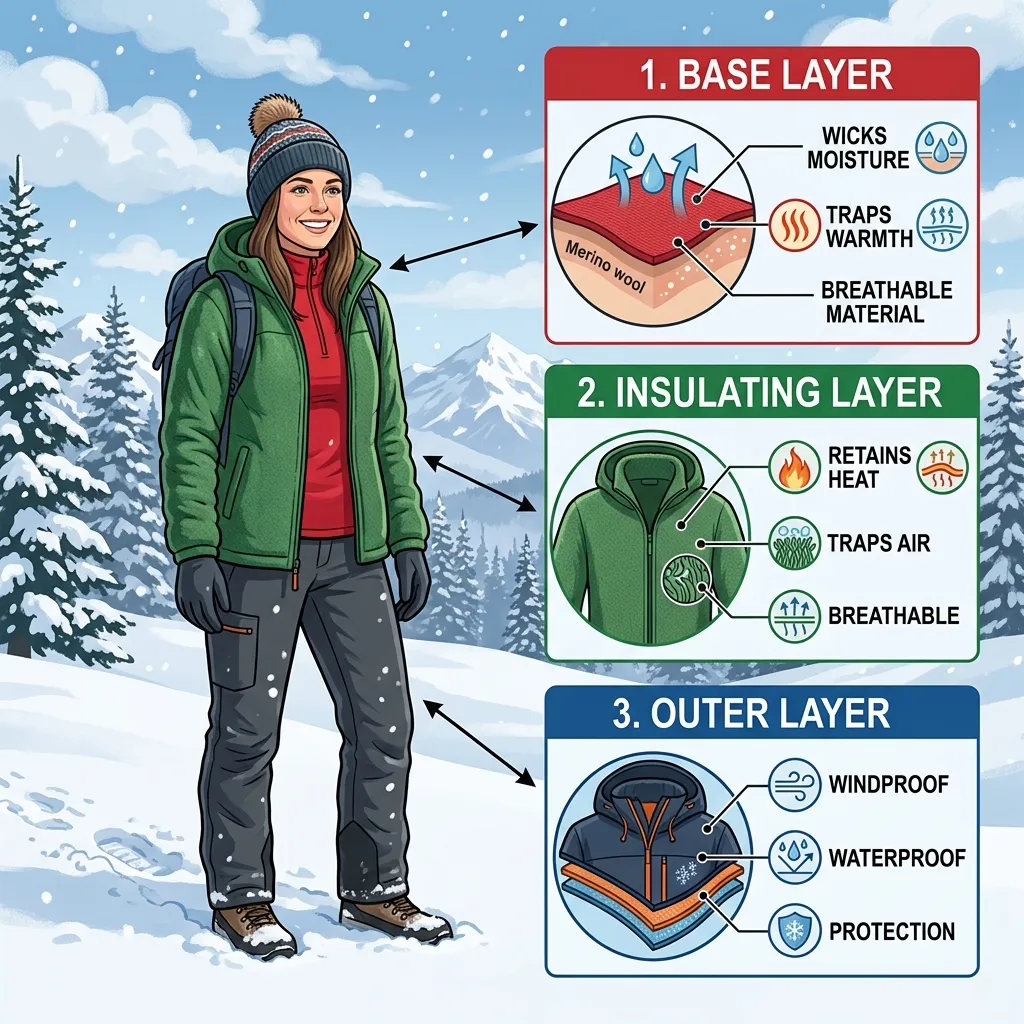
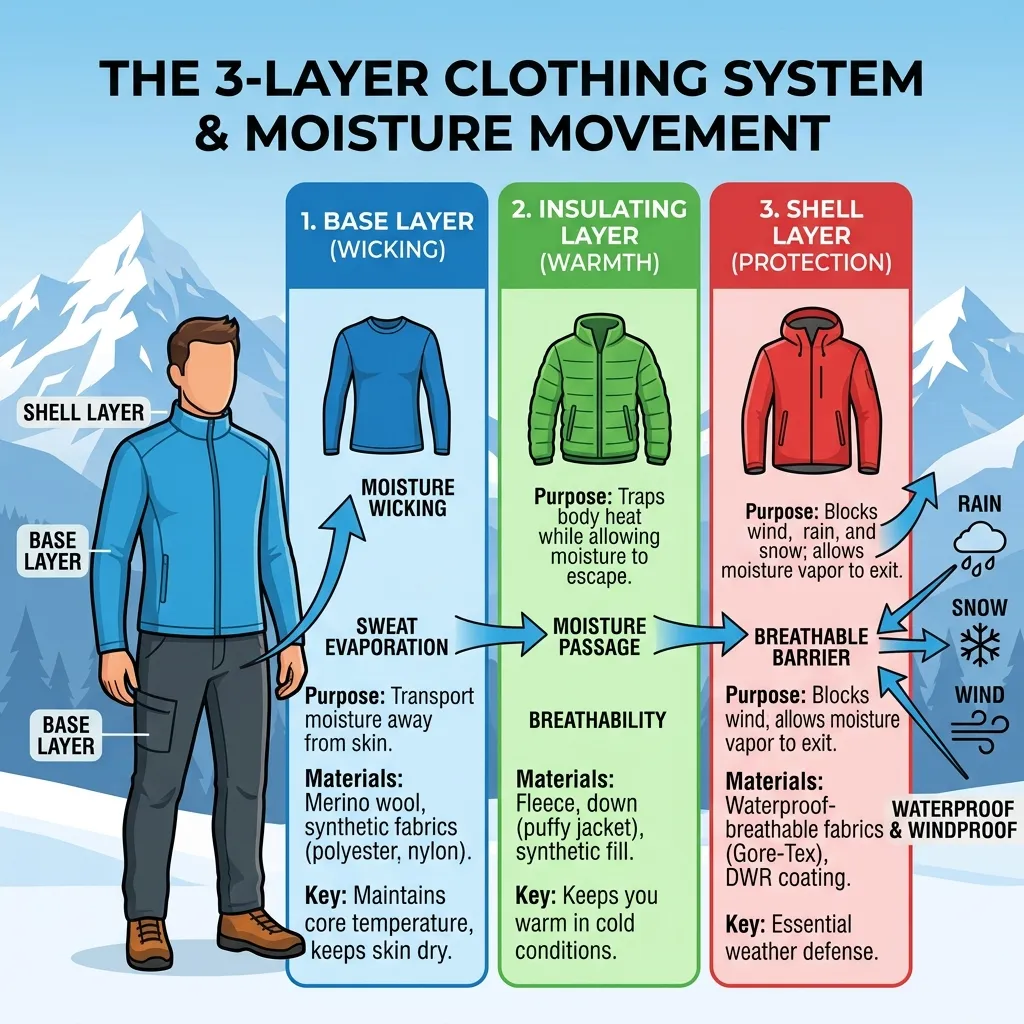
The key to staying warm is not wearing one giant coat, but using the three-layer system to manage moisture and temperature fluctuations:
- Base Layer (Wicking): This layer sits next to your skin. Its job is to wick sweat away from your body. Crucial Tip: Always choose synthetic materials (polyester) or merino wool; never wear cotton, as it absorbs moisture and chills you.
- Insulating Layer (Trapping Heat): This middle layer traps the heat generated by your body. Fleece, down vests, or puffy jackets work well here. Adjust its thickness based on temperature.
- Outer Layer (Shell/Protection): This is your shield against the elements. It must be waterproof and windproof. Look for breathable membranes to prevent overheating while blocking snow and wind.
🧤 Essential Safety Gear Checklist
Beyond clothing, these items are non-negotiable:
- Headwear: A warm hat that covers your ears (heat loss is significant from the head).
- Hands: Waterproof gloves or mittens (mittens are generally warmer than gloves).
- Feet: Moisture-wicking wool socks and waterproof, insulated boots with good traction.
- Eyes: UV-protected sunglasses or goggles to prevent snow blindness and glare damage.
- Hydration & Fuel: Always carry water and high-energy snacks (nuts, dried fruit) to maintain blood sugar levels.
🚨 Safety Protocols: Never Go Alone
Before heading out, always follow these safety rules:
- Check Forecasts: Be aware of extreme cold warnings, wind chill factors, and potential storms.
- Tell Someone Your Plan: Inform a friend or family member of your exact route and expected return time.
- Carry Essentials: Always pack a first-aid kit, emergency blanket, and communication device (fully charged).
- Know the Risks: If venturing into backcountry areas, take an avalanche safety course.
How Can Beginners Get Started in Winter Sports?
Feeling intimidated by the snow? Start small and focus on building skills gradually.
❄️ Snowshoeing: The Easiest Entry Point
Snowshoeing is highly recommended for beginners because it requires minimal technical skill and can be done on relatively flat, groomed trails.
- Action Step: Rent equipment first to test the activity without a major investment.
- Goal Setting: Start with short, 30-minute walks. Gradually increase distance as your stamina improves.
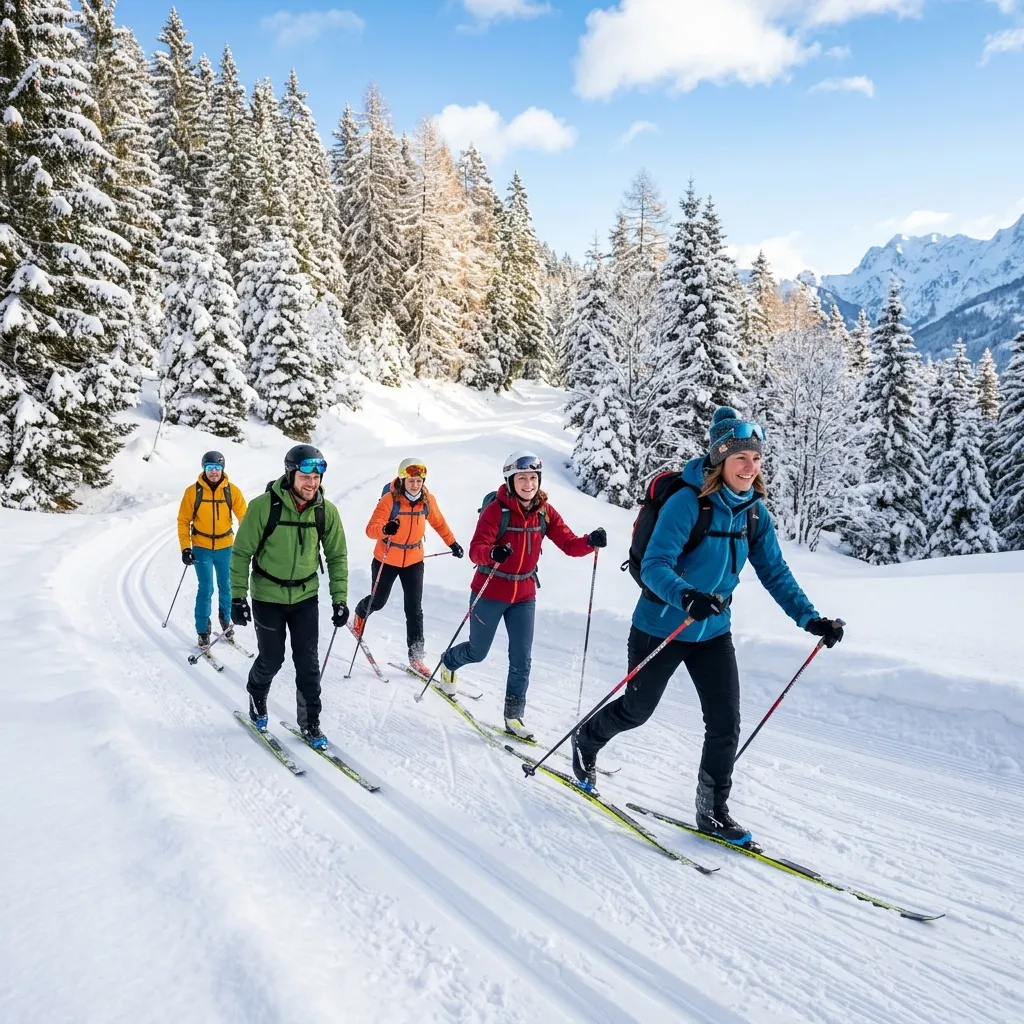
⛷️ Cross-Country Skiing: The Gentle Workout
This style of skiing is designed for endurance and exploration across flat or gently rolling terrain, making it less intimidating than downhill skiing.
- Action Step: Take a beginner lesson to learn the basic gliding technique (the "classic" stride).
- Focus: Concentrate on maintaining rhythm and breathing deeply rather than speed.
⛸️ Ice Skating: Classic Fun
Ice skating is accessible, fun, and excellent for core balance.
- Action Step: Start by practicing simple glides in a controlled environment (like an indoor rink) before attempting complex moves.
- Tip: Wear supportive footwear and always fall onto your hips or backside to minimize injury risk.
Where Should I Find Local Winter Activities?
Finding the right location requires checking both digital resources and local community connections:
- Online Trail Apps (e.g., AllTrails): Use these platforms to find rated snowshoeing and hiking trails, including difficulty levels and recent conditions reports.
- Local Parks & Recreation: Check your municipal website for public ice rinks or maintained cross-country ski loops that are open to the community.
- Outdoor Retailers/Clubs: Visit local gear shops; they often have bulletin boards with information on guided trips, lessons, and local club meetups.
Summary: Your Winter Adventure Starts Now
Winter outdoor activities offer a powerful combination of physical fitness benefits (cardio, strength, balance) and crucial mental health support by combating SAD through natural light exposure. By prioritizing safety—through proper layering, planning, and gradual skill building—you can transform the cold season into an opportunity for invigorating adventure. Get geared up, find a local trail, and embrace the power of the winter warrior!
References
- Mayo Clinic - Seasonal Affective Disorder (SAD): https://www.mayoclinic.org/diseases-conditions/seasonal-affective-disorder/symptoms-causes/syc-20364651
- National Ski Areas Association: https://www.nsaa.org/
- American Hiking Society: https://americanhiking.org/
Frequently Asked Questions
Yes, they are! Start with low-impact options like snowshoeing or cross-country skiing on groomed trails. Always take lessons and never go alone.
Regular outdoor exercise, especially during daylight hours, is highly effective. Combining physical activity with natural sunlight exposure helps regulate mood and boost Vitamin D levels.