

What is the Power of Breathwork, and How Does It Impact Your Body?
Consciously controlling your breath is one of the most immediate and powerful tools available for improving physical and mental health. Breathwork refers to using specific breathing patterns to influence your body's physiological state—shifting it from a stressed "fight-or-flight" mode to a calm, restorative "rest-and-digest" mode. By mastering mindful breathing, you can directly regulate the autonomic nervous system (ANS), significantly reducing stress, boosting focus, and promoting deep relaxation anytime, anywhere.
Understanding the Science: The ANS Connection
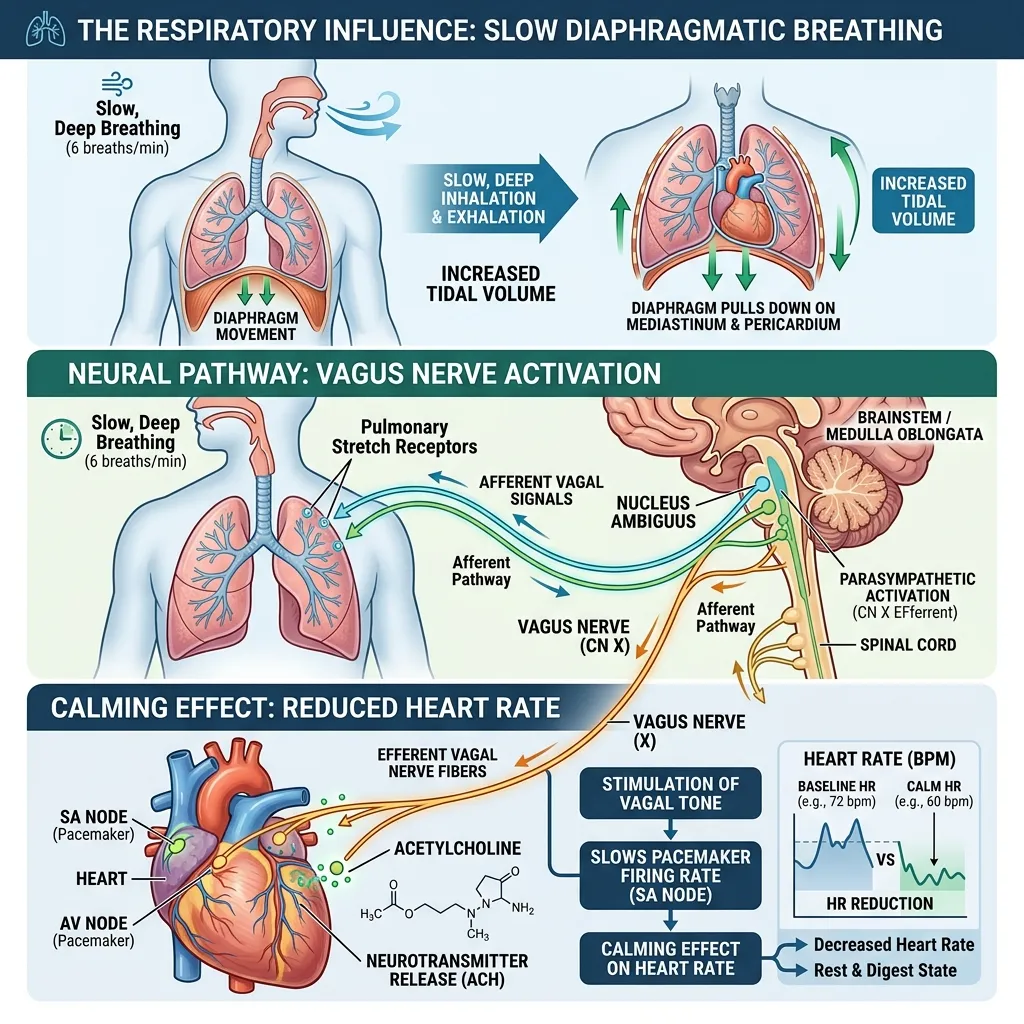
Breathing is not just an automatic function; it is deeply intertwined with your autonomic nervous system (ANS). This system controls involuntary bodily functions like heart rate and digestion, operating through two main branches:
- The Sympathetic Nervous System (SNS): This is the body's alarm system—the "fight-or-flight" response. When you perceive danger or stress, the SNS activates, causing rapid, shallow chest breathing, increased heart rate, and heightened alertness.
- The Parasympathetic Nervous System (PNS): This is the "rest-and-digest" system. When activated, the PNS slows your heart rate, lowers blood pressure, and encourages deep, rhythmic breathing using the diaphragm, promoting profound relaxation.
When we are chronically stressed, our SNS remains in overdrive, leading to shallow breathing that reinforces anxiety. By intentionally slowing down and deepening our breath, we send a signal to the brain that we are safe, thereby activating the calming PNS.
The Role of the Diaphragm and Vagus Nerve
The efficiency of your breath is determined by your primary muscle: the diaphragm. When you practice diaphragmatic breathing (or belly breathing), you engage this muscle fully. This deep, rhythmic pattern stimulates the vagus nerve, which acts as a major communication highway between the brain and vital organs. Stimulating the vagus nerve through slow breathing is scientifically proven to lower heart rate variability and promote overall calm.
Effective Breathwork Techniques for Stress Reduction and Focus
The beauty of breathwork is that it offers multiple tools, each targeting different aspects of well-being—from deep relaxation to intense energy boosts. Here are five highly effective techniques you can start practicing today:
1. Diaphragmatic Breathing (Belly Breathing)
This foundational technique teaches you how to breathe using your diaphragm rather than shallow chest muscles. It is the most direct way to activate the PNS.
- How to practice:
- Find a comfortable position, sitting or lying down.
- Place one hand on your chest and the other just below your ribcage (on your belly).
- Inhale slowly through your nose for a count of 4, focusing on making the belly rise while keeping the chest still.
- Exhale slowly through pursed lips for a count of 6, allowing the abdomen to fall completely.
- Repeat this cycle for 5–10 minutes.
- Best for: Immediate stress relief, improving sleep quality, and building foundational breath awareness.
2. 4-7-8 Breathing (The Relaxing Breath)
Developed by Dr. Andrew Weil, this technique is renowned for its ability to quickly calm the nervous system and prepare the body for rest.
- How to practice:
- Exhale completely through your mouth, making a whooshing sound.
- Inhale quietly through your nose for a count of 4.
- Hold your breath gently for a count of 7.
- Exhale completely through your mouth with the whoosh sound for a count of 8.
- Repeat this cycle 4 times.
- Best for: Managing acute anxiety, reducing pre-sleep jitters, and calming racing thoughts.
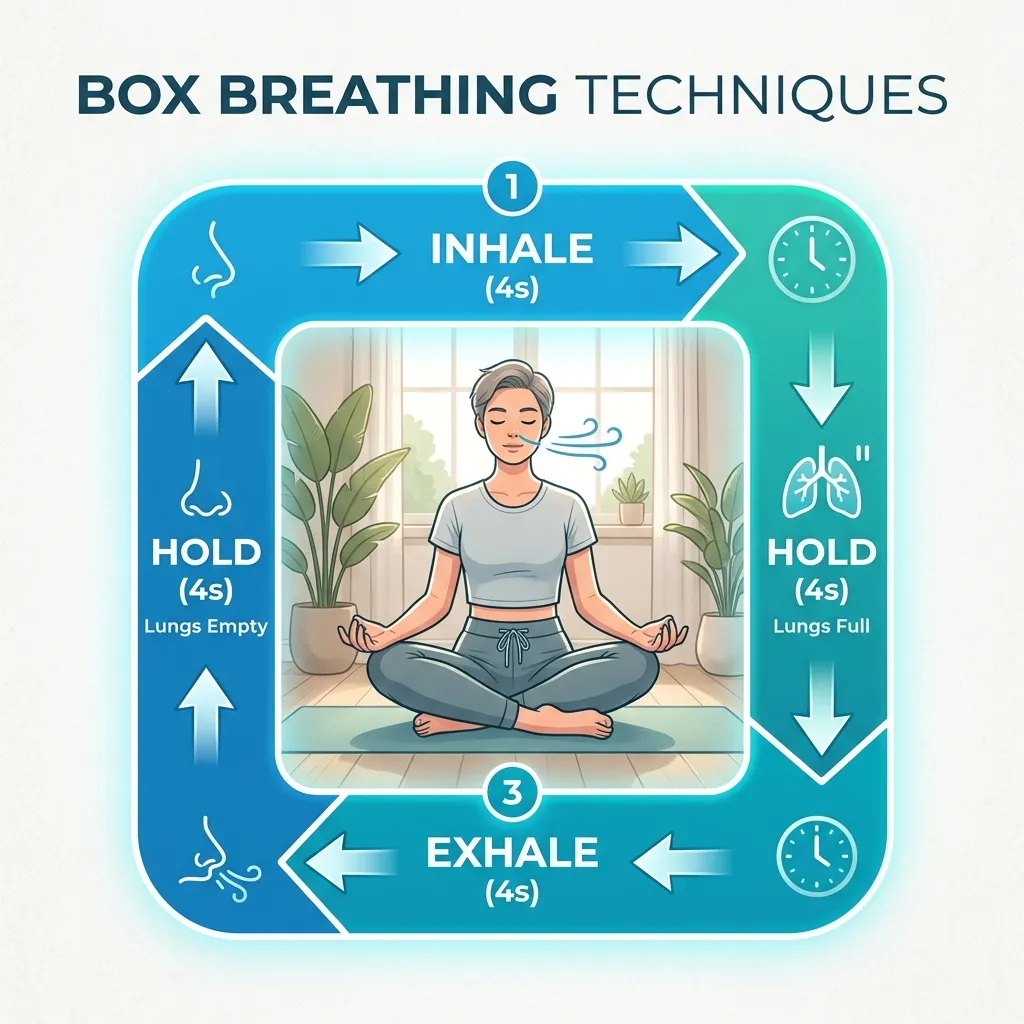
3. Box Breathing (Square Breathing)
Used by military personnel to maintain focus and composure in high-stress situations, this technique provides structure and immediate calm.
- How to practice:
- Inhale slowly through your nose for a count of 4.
- Hold the breath gently for a count of 4.
- Exhale slowly through your mouth for a count of 4.
- Hold the lungs empty (before inhaling) for a count of 4.
- Repeat this cycle for 5–10 minutes.
- Best for: Improving focus, maintaining composure during panic or high-pressure work situations, and balancing the nervous system.
4. Alternate Nostril Breathing (Nadi Shodhana)
This ancient yoga practice is highly effective at balancing the energy flow in the body and calming both the mind and the physical system.
- How to practice:
- Sit comfortably with a straight spine. Use your right thumb and ring finger for nostril control.
- Close the right nostril (thumb) and inhale deeply through the left nostril.
- Release the right nostril, close the left nostril (ring finger), and exhale slowly through the right nostril.
- Inhale through the right nostril.
- Release the right nostril, close the left nostril, and exhale through the left nostril.
- This completes one cycle. Repeat for 5–10 minutes.
- Best for: Balancing emotional states, improving concentration, and clearing mental clutter.
5. Energizing Breathwork (Breath of Fire & Bhastrika)
These techniques involve rapid, forceful breathing and are excellent for increasing vitality and mental clarity. Caution is advised; always start slowly.
- Breath of Fire (Kapalabhati): Characterized by sharp, forceful exhalations and passive inhalations. It stimulates the digestive system and clears toxins.
- Best for: Boosting energy levels, clearing congestion, and improving mental alertness.
- Bhastrika (Bellows Breath): Involves rapid, rhythmic expansion and contraction of the chest and abdomen.
- Best for: Warming the body, increasing circulation, and strengthening respiratory capacity.
Why Is Mindful Breathing Essential for Daily Well-Being?
The benefits of consistent breathwork extend far beyond simply reducing stress. It is a holistic practice that improves multiple systems simultaneously:
- Cardiovascular Health: By activating the PNS, deep breathing naturally lowers heart rate and blood pressure over time.
- Mental Resilience: Regular practice trains your mind to remain calm under duress, building emotional regulation skills.
- Sleep Quality: Techniques like 4-7-8 help quiet the racing thoughts that often prevent restful sleep.
- Immune Function: By reducing chronic stress (a major immune suppressant), breathwork helps maintain a balanced physiological state.
Making Mindful Breathing a Daily Habit
The key to unlocking these benefits is consistency. Treat breathwork not as an emergency measure, but as preventative maintenance for your nervous system.
- Morning Routine: Start the day with 5 minutes of Diaphragmatic or Alternate Nostril breathing to set a calm and focused tone before checking emails or news.
- Mid-Day Reset: When you feel overwhelmed at work, take two minutes to perform Box Breathing. This acts as an instant physiological reset button.
- Evening Wind-Down: Dedicate 10 minutes before bed to the 4-7-8 technique. This signals to your body that it is time to transition into deep rest.
Important Safety Note: If you have pre-existing conditions such as asthma, high blood pressure, or heart issues, please consult with a healthcare professional before incorporating vigorous breathwork techniques like Breath of Fire.
Summary & Next Steps
The power of your breath is literally the power to regulate your internal state. By understanding the link between conscious breathing and the autonomic nervous system, you gain immediate control over your stress response. Start small: commit to just five minutes of diaphragmatic breathing today. With consistent practice, mindful breathing will become a natural habit that supports profound physical, mental, and emotional well-being.
Frequently Asked Questions
Always consult your healthcare provider. Some techniques may need modification based on your specific condition.