

Self-awareness is the foundational skill for achieving holistic health and profound well-being. It is the ability to accurately understand your own thoughts, emotions, motivations, and physical signals—not through judgment, but through non-judgmental observation. By mastering this inner dialogue, you gain the power to make informed choices that align with your deepest values, leading to a more resilient and fulfilling life.
In our fast-paced modern world, it is easy to become disconnected from our internal compass. We often prioritize external demands over listening to the quiet wisdom of our bodies and emotions. Cultivating self-awareness, therefore, is not merely an abstract concept; it is a vital practice that empowers you to navigate stress, improve relationships, and build lasting physical health.
Why Is Self-Awareness Crucial for Holistic Health?
Self-awareness acts as the central operating system for your well-being. It provides the necessary data points—from recognizing emotional triggers to noticing subtle changes in appetite—that allow you to proactively manage your health rather than reacting to crises. When you understand why you feel a certain way or what is causing physical tension, you can intervene early and effectively.
The Core Benefits of Self-Knowledge:
- Improved Emotional Regulation: You learn to identify emotional patterns (e.g., anxiety always spiking before deadlines) and develop healthy coping mechanisms instead of resorting to destructive habits.
- Better Physical Health Outcomes: By recognizing the link between stress and physical symptoms, you can address root causes—such as poor sleep or chronic tension—before they escalate into illness.
- Authentic Decision-Making: You move away from making choices based on external pressure and start choosing actions that align with your core values and true self.
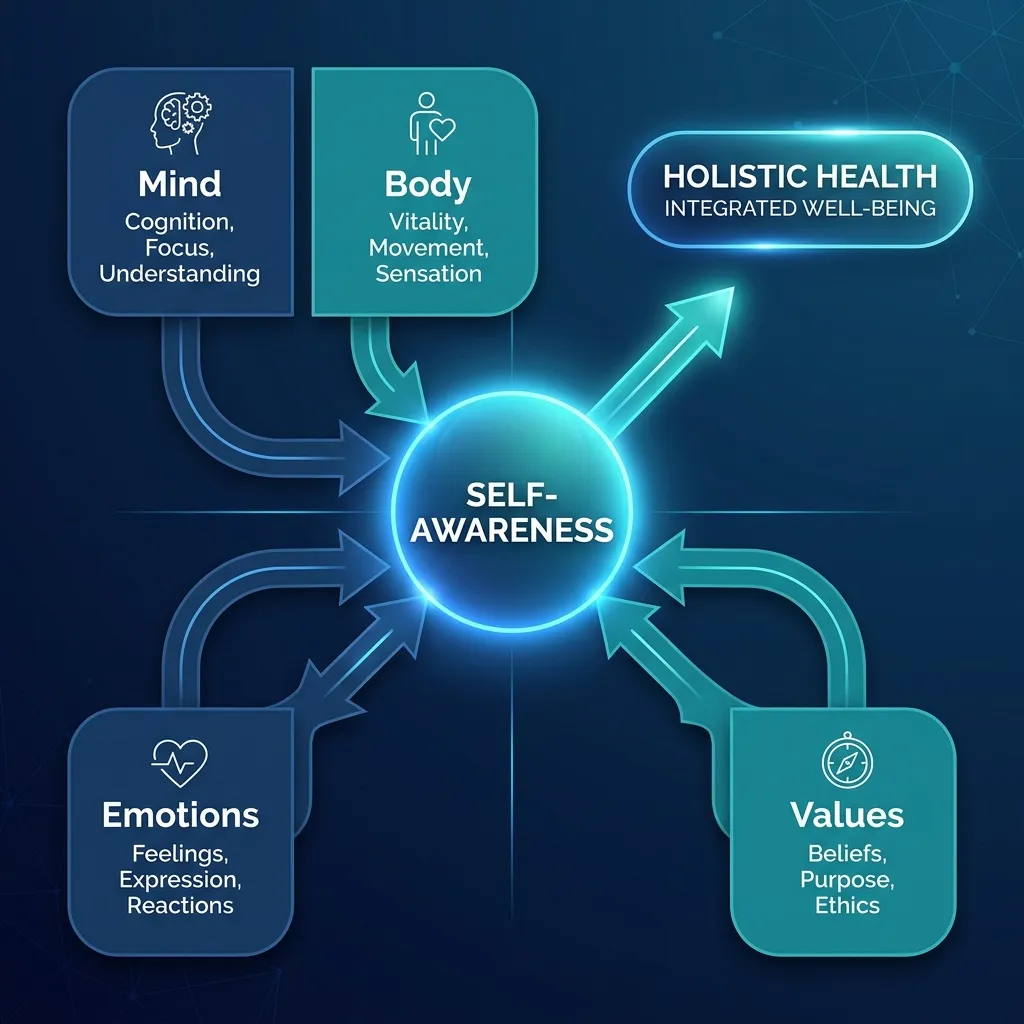
How Do My Body’s Signals Reflect My Emotional State?
Our bodies are constantly communicating with us through subtle signals. Learning to "read" these messages is perhaps the most immediate way to boost self-awareness. Ignoring these cues—whether it's persistent fatigue or unexplained stomach discomfort—can lead to chronic health issues.
Understanding the Body’s Language
Think of your body as a sophisticated messenger system. It communicates through several channels:
- Physical Sensations: Persistent aches, tension (especially in the neck and shoulders), digestive changes, or headaches are often signals that stress or poor posture is taking a toll.
- Energy Fluctuations: Chronic fatigue despite adequate sleep may signal nutritional deficiencies or underlying hormonal imbalances. Conversely, sudden bursts of energy without cause could indicate anxiety or mania.
- Sleep and Appetite Changes: Significant shifts in these patterns—such as insomnia or loss of appetite—are common indicators of emotional distress (like depression) that require attention.
- Intuitive Gut Feelings: These "gut feelings" are often your body's subconscious processing of information. While not always logical, they provide valuable guidance when you lack complete data.
Practical Ways to Reconnect with Your Body
The goal is not just noticing symptoms, but cultivating a deep, non-judgmental relationship with your physical self.
- Practice Mindful Body Scans: Systematically focus your attention on different parts of your body (starting from the toes and moving up). Simply notice sensations—tension, warmth, tingling—without trying to change them. This builds awareness and helps pinpoint areas needing care.
- Master Diaphragmatic Breathing: When stressed, breathing becomes shallow. Practice deep, slow breaths by expanding your abdomen (diaphragm) on the inhale. This immediately signals safety to your nervous system, calming anxiety.
- Mindful Movement: Engage in physical activity that feels good—whether it's gentle yoga, walking in nature, or stretching. Focus on how the movement feels rather than just achieving a goal.
- Practice Mindful Eating: Before every meal, pause and observe your hunger level (are you genuinely hungry?). While eating, focus entirely on the taste, texture, and smell of the food to honor your body's natural satiety cues.
What Tools Can I Use to Enhance Introspection?
While physical awareness is key, self-awareness also requires mental introspection—the deliberate act of examining your thoughts and feelings. These practices help you move from simply feeling things to actively understanding them.

1. Journaling for Clarity
Journaling is your private space for emotional processing. It allows you to externalize thoughts that might otherwise feel overwhelming or confusing.
- Free Writing: Write continuously for 10 minutes without stopping or editing. This helps release pent-up emotions and bypasses the critical mind.
- Reflective Prompts: Use specific questions (e.g., "When did I feel most energized this week?" or "What assumption am I making about this person?") to guide your thoughts toward patterns of growth.
2. Meditation for Focus
Meditation trains your attention span, helping you observe your thoughts as passing events rather than accepting them as absolute truth.
- Mindfulness Meditation: The core practice is simply observing the breath and noticing when your mind wanders—and gently bringing it back. This repeated act of redirection strengthens mental focus.
- Loving-Kindness Meditation: Directing feelings of compassion toward yourself and others helps regulate emotional responses, reducing self-criticism.
3. Mindfulness in Daily Life
Mindfulness is the practice of being fully present. You don't need to sit cross-legged on a cushion; you can practice it anywhere.
- Sensory Check-In: When waiting in line or washing dishes, pause and name five things you see, four things you hear, three things you feel (touch), two things you smell, and one thing you taste. This anchors your mind to the present moment.
- The "STOP" Method: When feeling overwhelmed, stop what you are doing. Take a deep breath. Observe your current thoughts and feelings. Proceed with intention.
How Do My Emotions Affect My Physical Health?
The connection between mind and body is scientifically proven: our emotional state directly influences our physiology. Understanding this link helps us realize that managing stress is physical self-care.
The Science of the Mind-Body Connection
When we experience strong emotions, our bodies release hormones like cortisol (the primary stress hormone). Chronic elevation of cortisol can weaken the immune system and contribute to inflammation, directly impacting cardiovascular health and digestion.
- Stress & Immunity: Persistent stress keeps your body in a "fight or flight" state, diverting energy away from healing and maintenance.
- Anxiety & Gut Health: The gut-brain axis means that emotional distress can manifest physically as digestive issues (e.g., Irritable Bowel Syndrome).
Developing Healthy Emotional Coping Skills
Effective self-awareness includes recognizing when your coping mechanisms are unhealthy. Instead of suppressing emotions or relying on avoidance, aim for regulation:
- Identify Triggers: Keep an emotion journal. Note the situation, the emotion felt, and the physical reaction (e.g., "Trigger: Criticism from boss; Emotion: Shame; Physical Reaction: Tight chest").
- Practice Emotional Labeling: Instead of saying "I feel bad," try to label it specifically: "I feel disappointed," or "I feel overwhelmed." Naming an emotion reduces its intensity and gives you power over it.
- Seek Support: Recognize that professional help (therapy, counseling) is a sign of strength, not weakness. A therapist can provide tools for deep emotional processing.
What Are My Core Values, and How Can I Live By Them?
Values are your internal compass—the principles that define what you believe is important in life. Living in alignment with these values is the ultimate source of purpose and fulfillment. When your actions contradict your core beliefs (e.g., valuing health but consistently skipping workouts), it creates emotional dissonance, leading to burnout and dissatisfaction.
Identifying Your Guiding Principles
To find your core values, reflect on moments when you felt most alive or most frustrated:
- Fulfillment: What activities make you lose track of time? (This points to intrinsic interests/values like creativity or connection.)
- Frustration: What situations consistently anger or frustrate you in others? (These often point to values that are being violated, such as integrity or fairness.)
- The "Ideal Self": If money and time were no object, how would you spend your days?
Aligning Actions with Values
Once identified, use these principles as a filter for decision-making:
- Goal Setting: When setting goals (career, fitness, relationship), ask: Does this goal honor my value of 'Family' or 'Growth'?
- Boundary Setting: Use your values to define boundaries. If you value rest, it is acceptable to say no to commitments that violate that boundary.
- Relationship Choices: Prioritize relationships with people who respect and support your core beliefs.
Summary: Making Self-Awareness a Daily Habit
Self-awareness is not a destination; it is a continuous, compassionate practice. By integrating these techniques into your daily routine—from the five minutes of journaling to the mindful breath before a meal—you build a stronger connection with yourself. This deep self-knowledge empowers you to make choices that support every facet of your life: physical health, emotional stability, and personal purpose.
Start small today. Commit to one practice—like observing your breathing for three minutes—and watch how quickly your ability to tune into your inner wisdom begins to transform your life.
Frequently Asked Questions
Start with mindful breathing or dedicating just five minutes each day to journaling. Focus on observing your thoughts and feelings without judgment.