

What Are the Common Pitfalls on a Holistic Wellness Journey?
Embarking on a holistic wellness journey is an exciting, deeply personal commitment to prioritizing your overall well-being. However, this path can be challenging because it requires integrating many new habits and concepts simultaneously. The most common pitfalls are perfectionism, feeling overwhelmed by information, becoming rigid, and struggling with self-compassion. Recognizing these traps is the first step toward building a sustainable, enjoyable, and lasting lifestyle change.
Why Does Perfectionism Undermine Wellness?
The pursuit of "perfect" health—the perfect diet, the perfect routine, the perfect body—is perhaps the biggest trap in wellness. This pressure creates an unsustainable standard that often leads to burnout rather than breakthrough.
How Does All-or-Nothing Thinking Manifest?
Perfectionism in this context means adopting all-or-nothing thinking. If you miss one workout or eat one meal that deviates from your plan, the tendency is to feel like a complete failure and give up entirely. This cycle of perfection -> slip-up -> guilt -> quitting is counterproductive to genuine progress.
To shift away from perfectionism, focus on these principles:
- Embrace Progress Over Perfection: View wellness as a spectrum, not a binary switch. A small improvement today is infinitely better than waiting for the "perfect" moment to start.
- Set Achievable Goals: Instead of aiming for an immediate overhaul, set micro-goals. For example: “This week, I will swap sugary drinks for water at lunch.” or “I will meditate for five minutes before bed.”
- Reframe Setbacks as Data Points: When you slip up, don't label it a "failure." Instead, ask: "What did this teach me?" Was I too tired? Did the timing work better? This turns mistakes into actionable data.

How Can We Manage Information Overload and Avoid Burnout?
The sheer volume of information available online—from supplements to diets to ancient practices—is daunting. This information overload can lead to paralysis, confusion, and ultimately, burnout. You feel like you need to know everything, which is impossible.
Strategies for Filtering Wellness Noise
To navigate the complex world of health advice, adopt a critical, structured approach:
- Prioritize Foundational Pillars: Before diving into niche supplements or advanced therapies, focus on the basics: sleep quality, nutritional balance, and stress management. These are non-negotiable foundations for any healthy lifestyle.
- Source Credibility First: Always ask: Who is providing this information? Prioritize sources backed by scientific research (e.g., peer-reviewed journals, major health institutions) over anecdotal claims or single-source marketing hype.
- Consult Qualified Professionals: If you are confused about conflicting advice, seek guidance from a qualified, integrative practitioner who can tailor recommendations to your unique needs and medical history.
- The "One Thing" Rule: When starting out, commit to focusing on one new habit for 30 days (e.g., drinking more water). Do not try to implement five changes at once; this is a guaranteed path to overwhelm.
What Does Sustainable Consistency Look Like?
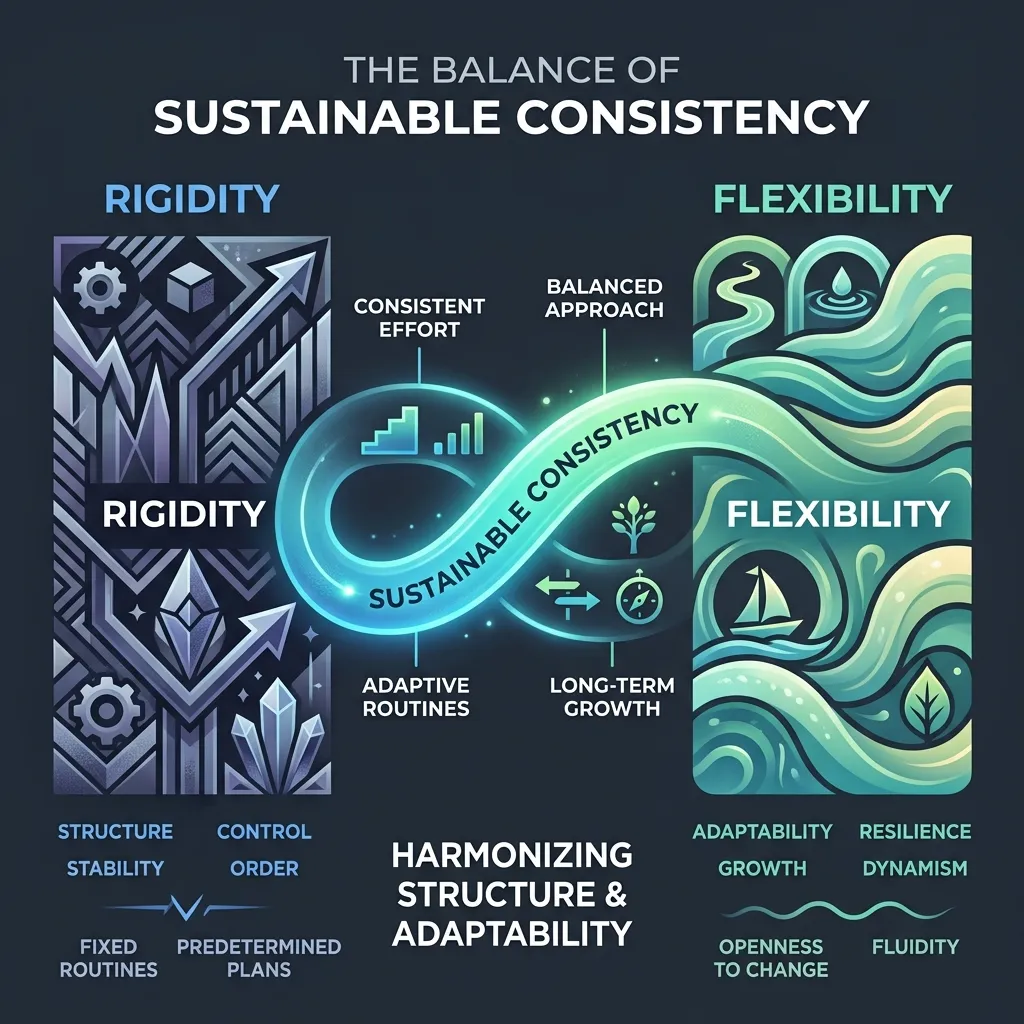
Consistency is vital, but it must be flexible consistency. Becoming too rigid—treating your routine like an unbreakable law—is its own form of stress and can lead to anxiety when life inevitably throws you off track.
Cultivating Flexibility
Sustainable habits are those that fit into the messy reality of life. This means:
- The 80/20 Rule: Aim for adherence about 80% of the time. Allowing yourself flexibility (the other 20%) prevents feelings of deprivation and makes the habit sustainable long-term.
- Listening to Your Body's Signals: If you are genuinely exhausted, a gentle walk is better than forcing an intense workout. If your gut is upset, nourishing food is better than restricting it. Your body is the best guide.
- Building Rituals, Not Rules: Instead of saying, "I must run every morning," try creating a ritual: "Every morning, I will dedicate 20 minutes to movement." This allows for variation (yoga, walk, stretch) while maintaining the commitment.
How Can We Cultivate Self-Compassion on this Journey?
Self-compassion is arguably the most powerful tool in holistic wellness. It means treating yourself with the same kindness, understanding, and patience you would offer a struggling friend. This practice directly counteracts the harsh inner critic that fuels perfectionism and burnout.
Core Practices for Compassionate Self-Talk
When you face a setback (a missed workout, an unhealthy meal), instead of criticizing yourself, use these techniques:
- Acknowledge the Suffering: Say to yourself, "This is hard right now." Naming the emotion reduces its power.
- Recognize Common Humanity: Remind yourself that struggling is part of being human. You are not alone in this experience.
- Practice Mindful Acceptance: Observe your critical thoughts without judgment. Instead of thinking, "I am lazy," try observing: "I am having the thought that I am lazy." This creates distance between you and the negative thought.
How Do We Navigate Conflicting Health Information?
The wellness industry is vast, unregulated, and often driven by marketing hype. When you encounter conflicting advice—one source says X, another says Y—it can be deeply confusing.
Developing Critical Thinking Skills
To find your personal truth amidst the noise:
- Identify the Mechanism: Instead of accepting a claim at face value ("This supplement cures everything"), ask: "How does this actually work?" Understanding the biological mechanism helps you evaluate its plausibility.
- Look for Consensus, Not Single Claims: A single study or expert opinion is rarely enough. Look for patterns and consensus among multiple reputable sources over time.
- Focus on Foundational Principles: Most effective health advice boils down to a few universal principles: adequate sleep, balanced nutrition, stress reduction, and movement. These are reliable anchors regardless of the trend.
Summary & Next Steps
The holistic path is not about achieving an unattainable ideal; it is about building a sustainable relationship with your own well-being. By replacing perfectionism with progress, managing information overload through critical thinking, and anchoring yourself in self-compassion, you can navigate any challenge. Remember that consistency is found in the effort to show up for yourself, not in flawless execution.
Sources & Further Reading:
- Neff, K. (2011). Self-compassion: The proven power of being kind to yourself. William Morrow.
- Sapolsky, R. M. (2004). Why zebras don't get ulcers: A guide to stress, stress-related diseases, and coping. Henry Holt and Company.
- Duhigg, C. (2012). The power of habit: Why we do what we do in life and business. Random House.
- Hanson, R. (2009). Buddha's brain: The practical neuroscience of happiness, love, and wisdom. New Harbinger Publications.
- Mate, G. (2003). When the body says no: The cost of hidden stress. Wiley.
Frequently Asked Questions (FAQ)
- Q: Is 'holistic' different from conventional medicine? A: Holistic approaches consider the whole person—mind, body, and spirit—while conventional medicine often focuses on specific symptoms or diseases. A truly integrated approach uses both perspectives.
- Q: How do I know if a wellness trend is evidence-based? A: Always check for sources. Look for recommendations from major health organizations (like NIH) and prioritize practices supported by scientific research, rather than relying solely on testimonials or single studies.
Frequently Asked Questions
Holistic approaches consider the whole person—mind, body, and spirit—while conventional medicine often focuses on specific symptoms or diseases.
Always check for sources. Look for recommendations from major health organizations (like NIH) and prioritize practices supported by scientific research.