Why is Quality Sleep So Crucial for Overall Health?
If you struggle to fall asleep or stay asleep, know that you are not alone—it's a common modern issue. Poor sleep quality impacts more than just your energy levels; it compromises mood regulation, weakens the immune system, and increases the risk of chronic conditions like hypertension and diabetes. Think of sleep as your body’s essential nightly maintenance cycle: it allows your brain to consolidate memories, repair muscle tissue, and regulate hormones. By incorporating restorative yoga into your routine, you can naturally calm the nervous system and prepare your mind and body for deep, uninterrupted rest.
How Does Yoga Address Common Sleep Disruptors?
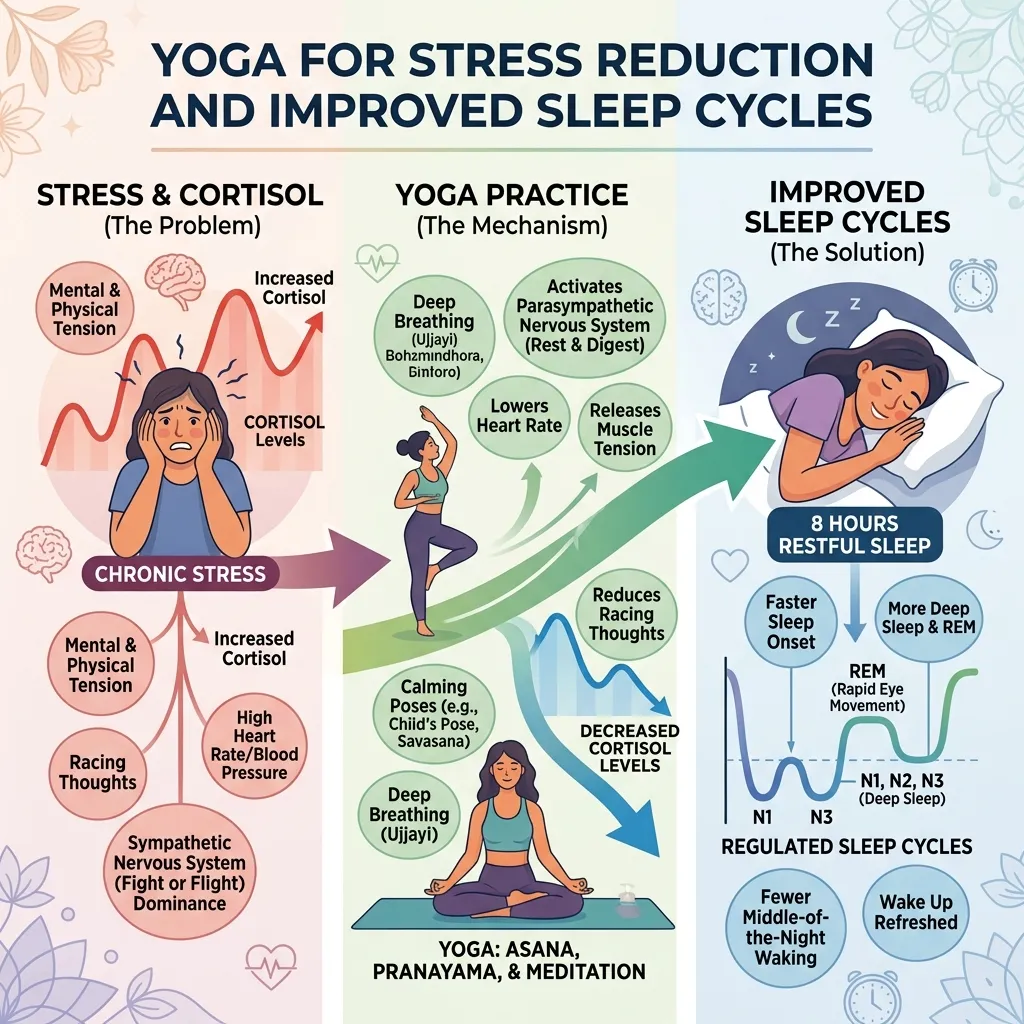
Yoga is more than just stretching; it is a holistic practice that intentionally connects mind, breath, and body. This comprehensive approach makes it uniquely effective at tackling the root causes of insomnia. Instead of just treating sleeplessness, yoga helps regulate the underlying physiological responses—like chronic stress and anxiety—that keep your mind racing when you should be resting.
🧘♀️ Calming the Stress Response (Cortisol)
Chronic stress keeps the body in a constant state of "fight or flight," flooding the system with cortisol. This hormone is designed for emergencies, not bedtime. Yoga counteracts this by activating the parasympathetic nervous system—the "rest and digest" mode. Gentle movement and deep breathing signal to your brain that you are safe, allowing cortisol levels to drop and promoting natural relaxation.
🧠 Quieting Racing Thoughts (Anxiety)
Insomnia is often fueled by anxiety about not sleeping well. Yoga incorporates mindfulness, which teaches you to anchor your attention to the present moment—specifically, your breath. By focusing on the inhale and exhale, you gently pull your mind away from worrying about tomorrow or regretting yesterday, creating a mental quietude necessary for sleep onset.
🦴 Releasing Physical Tension
Physical discomfort (like tight shoulders, hips, or back pain) can be major disruptors. Many people hold unconscious tension throughout the day. Restorative yoga poses are designed to gently lengthen and release these areas, promoting physical relaxation that complements mental calm.
Best Restorative Yoga Poses for Bedtime Relaxation
These gentle, passive poses require minimal effort but yield maximum calming benefits. Remember: always listen to your body and never push into pain.
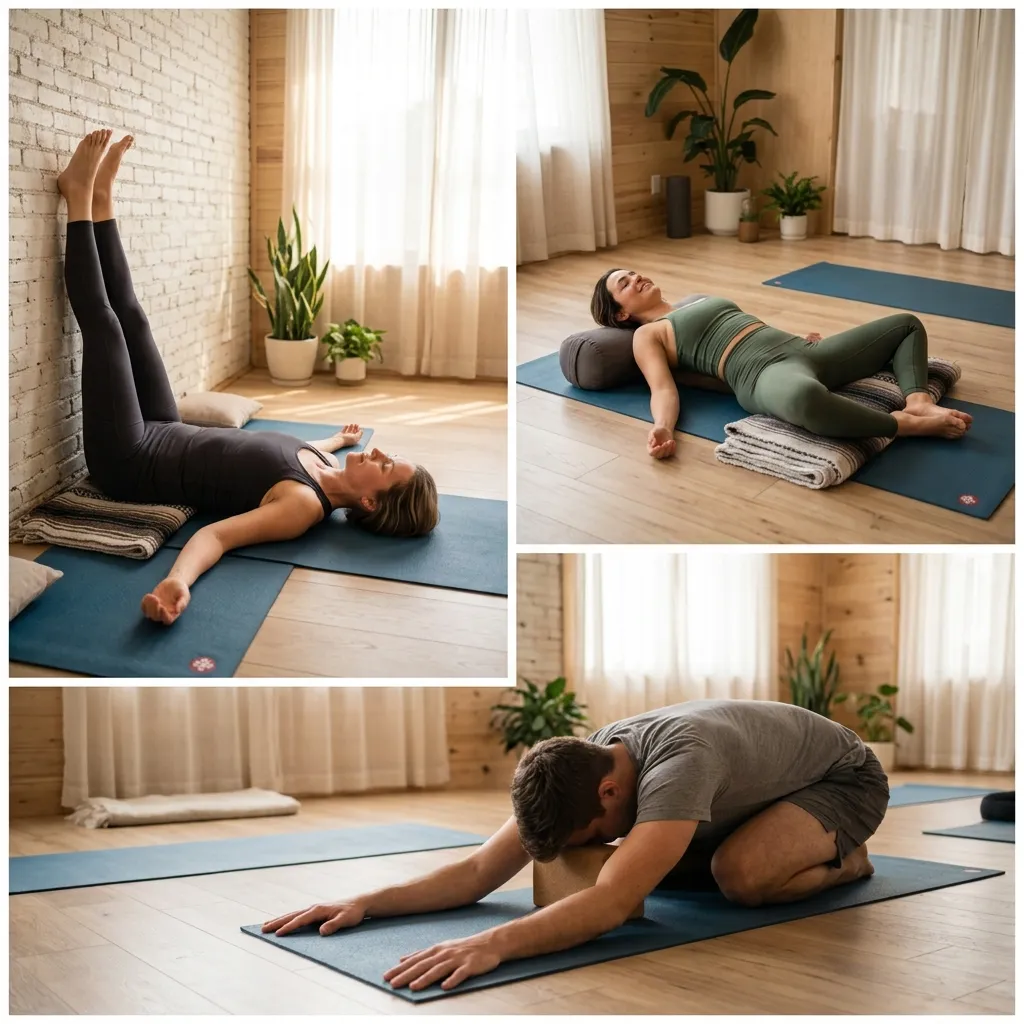
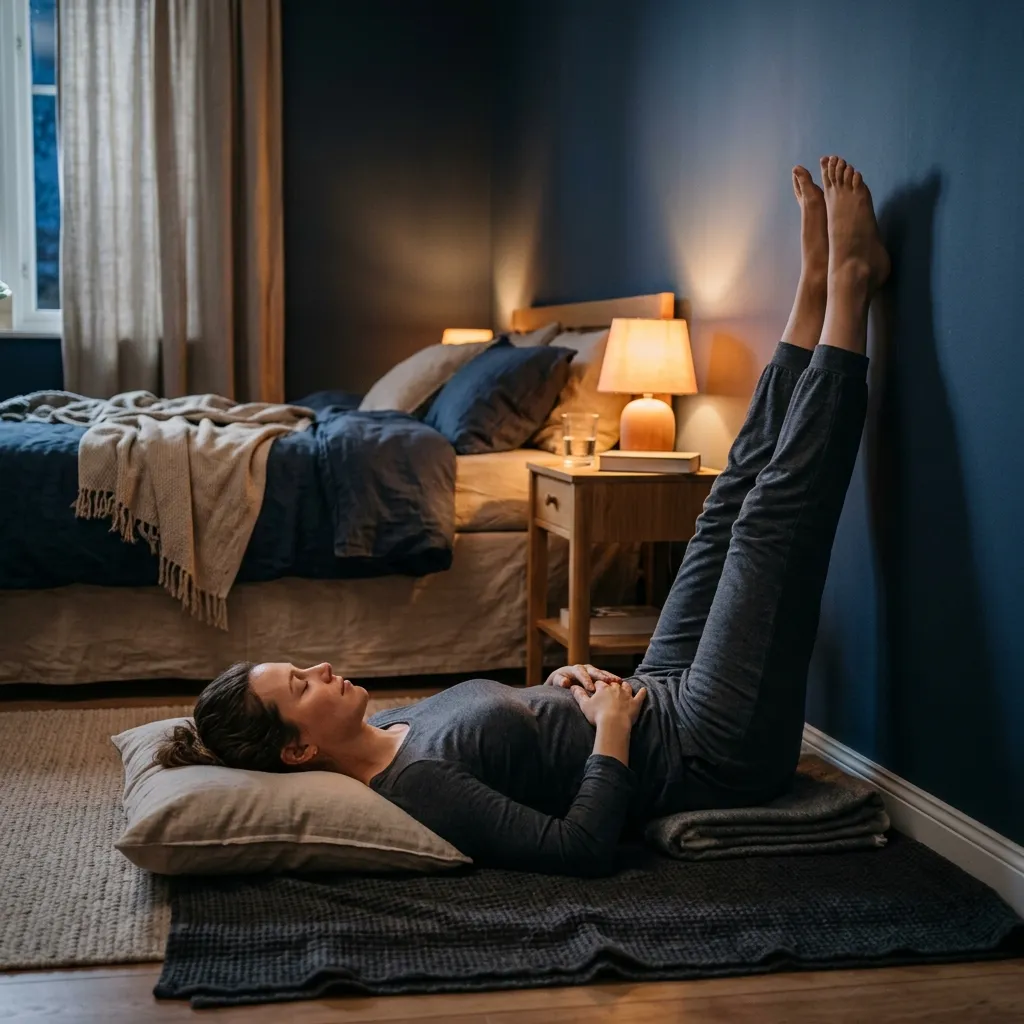
1. Legs-Up-the-Wall Pose (Viparita Karani)
This is one of the most restorative poses for sleep. By gently elevating the legs, it helps to reduce swelling, lower blood pressure, and signal deep relaxation throughout the entire circulatory system.
- How to practice: Sit sideways near a wall. Gently swing your legs up the wall until they are supported by gravity. Lie back onto the floor while keeping your hips close to the wall. Rest your arms comfortably at your sides.
- Hold time: 5–15 minutes.
- Key benefits: Calms the nervous system, reduces leg fatigue, and alleviates mild lower back tension.
2. Reclined Butterfly Pose (Supta Baddha Konasana)
This pose gently opens the hips and groin area—areas where we often store physical stress. It is deeply grounding and promotes a sense of surrender.
- How to practice: Lie on your back. Bring the soles of your feet together, letting your knees fall open like butterfly wings. Allow your arms to rest naturally at your sides.
- Hold time: 5–10 minutes.
- Modification Tip: Place pillows or folded blankets under your knees and hips for maximum support and comfort.
3. Child's Pose (Balasana)
A classic, comforting pose that provides a gentle stretch to the back, hips, and thighs while simultaneously calming the mind. It is perfect for winding down after a day of activity.
- How to practice: Kneel on the floor with your knees hip-width apart. Exhale and fold forward, resting your forehead on the mat. Extend your arms forward or rest them alongside your body.
- Hold time: 1–3 minutes.
- Modification Tip: If kneeling is uncomfortable, place a folded blanket under your hips for padding.
Mastering Pranayama: Breathing Techniques for Sleep
Breathing techniques, known as pranayama, are arguably the fastest way to calm an overactive mind and prepare the body for sleep. They directly stimulate the vagus nerve, which governs the parasympathetic (rest) state.
🌬️ Diaphragmatic Breathing (Belly Breathing)
This technique is foundational. Instead of shallow chest breathing, you focus on expanding your belly with each inhale. This deep, rhythmic movement signals safety and relaxation to the brain.
- Position: Lie comfortably on your back. Place one hand on your chest and the other just below your ribcage (on your belly).
- Inhale: Breathe slowly through your nose, focusing on letting your belly rise while keeping your chest relatively still.
- Exhale: Exhale slowly through pursed lips, allowing your belly to fall completely.
- Practice: Repeat this cycle for 5–10 minutes.
👃 Alternate Nostril Breathing (Nadi Shodhana)
This technique is excellent for balancing the two hemispheres of the brain and clearing mental clutter, making it ideal for pre-sleep meditation.
- Position: Sit comfortably with a straight spine. Use your right hand to close one nostril at a time.
- Cycle: Inhale through the left nostril (closing the right). Exhale through the right nostril (closing the left). Repeat this pattern, alternating sides for 5–10 minutes.
Building Your Perfect Sleep Hygiene Routine
Consistency is the most powerful tool in improving sleep quality. Instead of viewing yoga as a workout, view it as a ritual—a signal to your body that it's time to rest.
- The Golden Hour Rule: Dedicate the 60 minutes before you plan to sleep to winding down. This means no screens (blue light disrupts melatonin production), no intense exercise, and minimal stimulating conversations.
- Sample Routine (15–20 Minutes):
- Warm-up & Stretch (5 min): Start with gentle neck rolls or cat/cow stretches to release physical tension.
- Restorative Poses (7 min): Practice Legs-Up-the-Wall and Reclined Butterfly, holding each for several minutes.
- Breathwork & Meditation (5–8 min): Conclude with 5 minutes of Diaphragmatic Breathing or a guided meditation to settle the mind completely.
By establishing this predictable, calming routine, you train your body's internal clock (circadian rhythm) to associate these actions with sleep, leading to deeper and more restorative rest.
Frequently Asked Questions
Always listen to your body. Modify poses and consult with a physical therapist or doctor before starting any new routine.