What is the Connection Between Yoga, Flexibility, and Mobility?
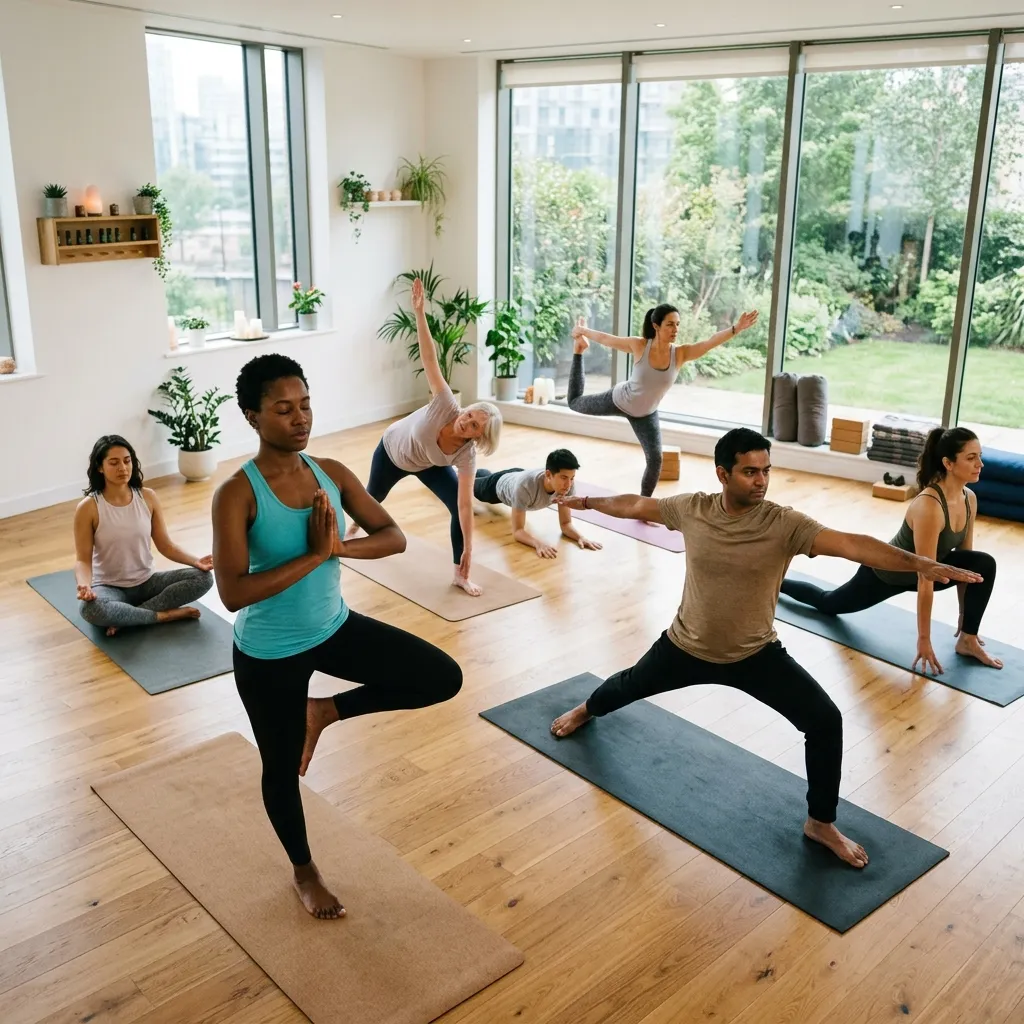
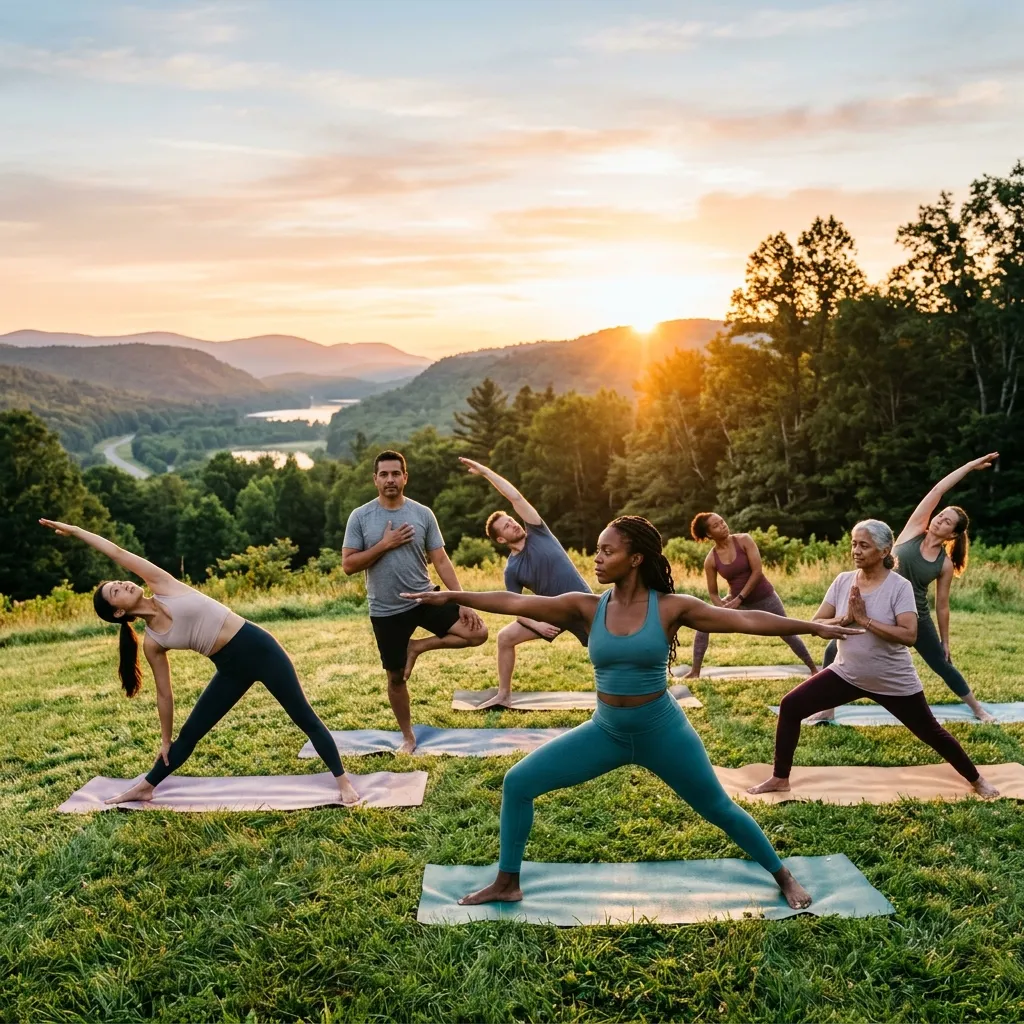
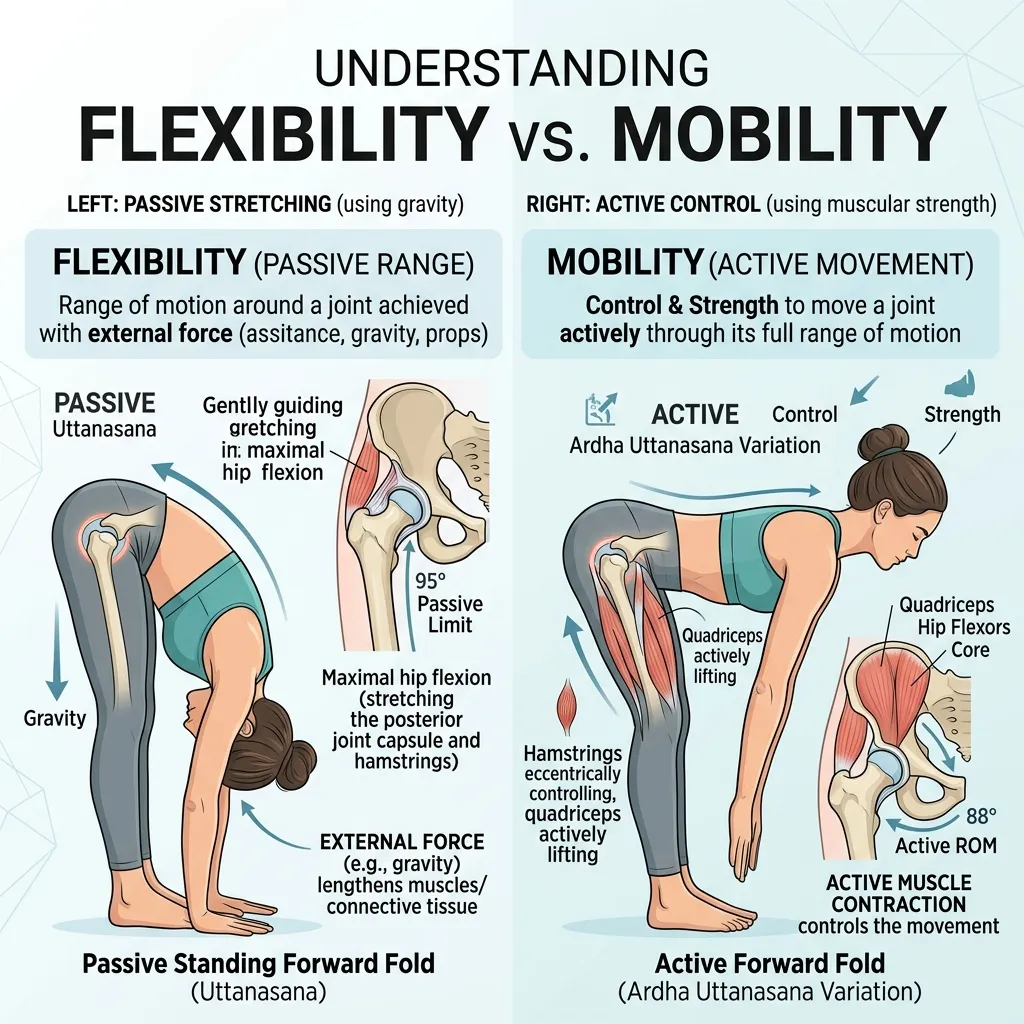
Yoga is a holistic practice that uses mindful movement to improve both flexibility (the range of motion around a joint) and mobility (the ability to actively move through that full range). It teaches you how to gently stretch muscles while simultaneously strengthening the supporting connective tissues. Unlike simply stretching after a workout, yoga integrates breathwork and controlled poses, ensuring that your body learns to move efficiently and safely.
Why is Improving Flexibility So Important for Daily Life?
Many people assume that stiffness is normal, but chronic tightness can lead to pain and limit daily function. By improving your body's natural range of motion, you achieve several critical benefits:
- Injury Prevention: Flexible muscles are less likely to tear or strain when subjected to unexpected movements.
- Better Posture: Yoga helps release tension in the tight chest and hip flexors that often pull the spine out of alignment.
- Pain Reduction: Increased circulation and reduced muscle tension can significantly alleviate chronic back, neck, and shoulder pain.
- Improved Balance: Developing better control over your joints enhances stability, which is crucial for preventing falls as you age.
How Does Yoga Science Actually Improve My Range of Motion?
The benefits of yoga are rooted in the science of connective tissue health. It's not just about "stretching"; it’s about stimulating deep physiological changes:
- Connective Tissue Health: Your body contains ligaments and tendons (connective tissues) that can become stiff over time. Yoga poses gently lengthen these structures, improving joint support and stability.
- Synovial Fluid Production: Movement stimulates the joints to produce synovial fluid, a natural lubricant that reduces friction and makes movement smoother.
- Neurological Response: Consistent stretching teaches your nervous system to relax deeper into a stretch. This process helps override the body's protective "tightness" reflex, allowing for greater range of motion over time.
🧘♀️ Key Areas Targeted by Yoga Poses
Yoga poses are designed to address common areas of tightness:
- Hamstrings and Hips: Often tight from prolonged sitting, leading to lower back strain.
- Spine: Improves spinal articulation through twists and gentle backbends.
- Shoulders: Releases tension accumulated from desk work and poor posture.
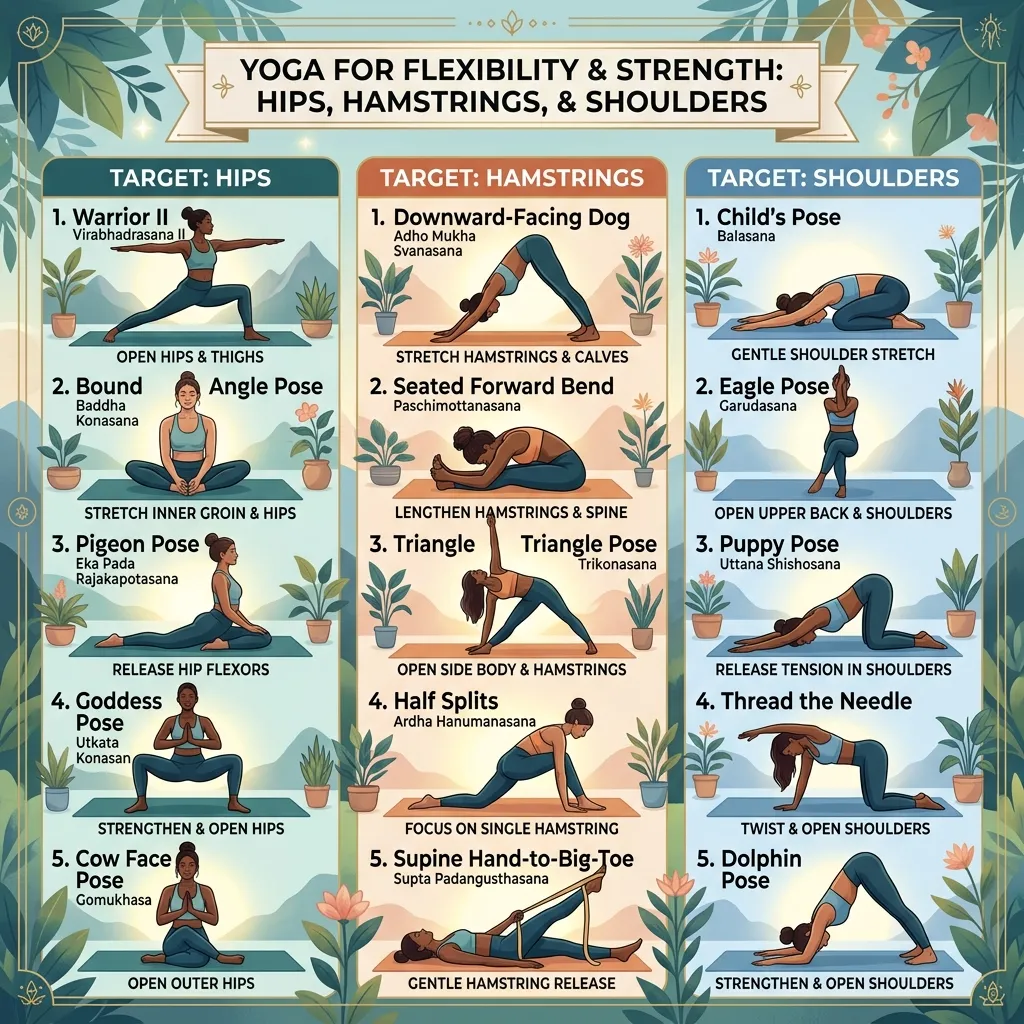
What Are the Best Yoga Poses for Flexibility?
Remember to always listen to your body. Never push into sharp pain; instead, aim for a deep, comfortable stretch. Start with modifications if needed.
🦵 Targeting Hamstrings and Lower Back
Tight hamstrings are one of the most common sources of discomfort. These poses gently lengthen the back of the thigh:
- Downward-Facing Dog (Adho Mukha Svanasana):
- How to: Start on hands and knees, tuck your toes, and lift your hips up and back into an inverted V shape. Focus on keeping a straight line from wrists through hips. Modification: Keep a slight bend in the knees if hamstrings are very tight.
- Standing Forward Fold (Uttanasana):
- How to: Stand with feet hip-width apart. Hinge at your hips, allowing your torso to fold forward while keeping your back as straight as possible. Let your head hang heavy to release neck tension.
🍑 Opening the Hips and Pelvis
Hip openers are crucial for counteracting the effects of sitting and improving overall gait:
- Pigeon Pose (Eka Pada Rajakapotasana):
- How to: From a kneeling position, bring one knee forward and extend the opposite leg back. Gently fold your torso over the front leg. Modification: Use a blanket under the hip for support if deep stretching is uncomfortable.
- Butterfly Pose (Baddha Konasana):
- How to: Sit with the soles of your feet together, letting your knees fall open. Keep your spine long and gently press your knees toward the floor. This pose is excellent for warming up the inner thighs.
🐍 Improving Spinal Mobility
The spine requires movement in multiple planes (flexion, extension, rotation) to remain healthy:
- Cat-Cow Flow (Marjaryasana to Bitilasana):
- How to: Start on hands and knees. Inhale while dropping your belly and lifting your gaze (Cow). Exhale while rounding your back and tucking your chin (Cat). Repeat this flowing sequence slowly, coordinating movement with breath.
- Supine Twist:
- How to: Lie on your back with knees bent. Extend arms out to the sides. Exhaling, gently drop both knees together to one side while keeping your shoulders grounded. This safely mobilizes the lower spine.
💪 Releasing Tension in Shoulders and Arms
These poses help restore proper shoulder mechanics often lost due to desk work:
- Cow Face Arms (Gomukhasana Arms):
- How to: Reach one arm overhead, bending at the elbow and bringing your hand down your back. Repeat with the other arm, aiming to clasp hands behind your back for a deep stretch across the shoulder joint.
- Thread the Needle Pose:
- How to: From hands and knees, pass one arm underneath the opposite armpit, resting your shoulder and ear on the ground. This gently stretches the upper back and shoulders.
Beyond Flexibility: The Holistic Benefits of Practice
The advantages of yoga extend far beyond simply touching your toes. By committing to a consistent practice, you are investing in overall physical and mental resilience.
- Enhanced Circulation: Stretching increases blood flow throughout the muscles and connective tissues, which helps flush out metabolic waste products and reduce inflammation.
- Stress Reduction (Mind-Body Connection): Yoga combines physical movement with breathwork. This mindful focus activates the parasympathetic nervous system—the body's "rest and digest" mode—significantly lowering cortisol levels and reducing anxiety.
- Improved Balance: Many poses require balancing on one leg or maintaining alignment, which strengthens stabilizing muscles around the ankles, knees, and hips.
Summary & Next Steps: Making Yoga a Habit
Remember that flexibility is not a destination; it is an ongoing journey of self-awareness. The most important rule in yoga is to move with intention and respect your body's current limits.
Actionable Tips for Beginners:
- Start Slow: Begin with 10–15 minutes of gentle stretching or beginner flow videos rather than attempting advanced poses.
- Prioritize Breath: Never hold your breath during a stretch. Use deep, slow inhales and exhales to deepen the pose safely.
- Consistency Over Intensity: A short, daily practice is far more beneficial than one intense session per week.
By integrating mindful movement into your routine, you are giving yourself the gift of greater physical freedom, reduced pain, and improved mental clarity. Consult with a healthcare professional before starting any new fitness regimen.
Frequently Asked Questions
Absolutely. Yoga is designed for all levels. Focus on listening to your body and starting with gentle, modified poses.
Consistency is key. While noticeable changes can occur within weeks, true improvement requires regular practice over months.