What Exactly Is Yoga? A Holistic Mind-Body Practice
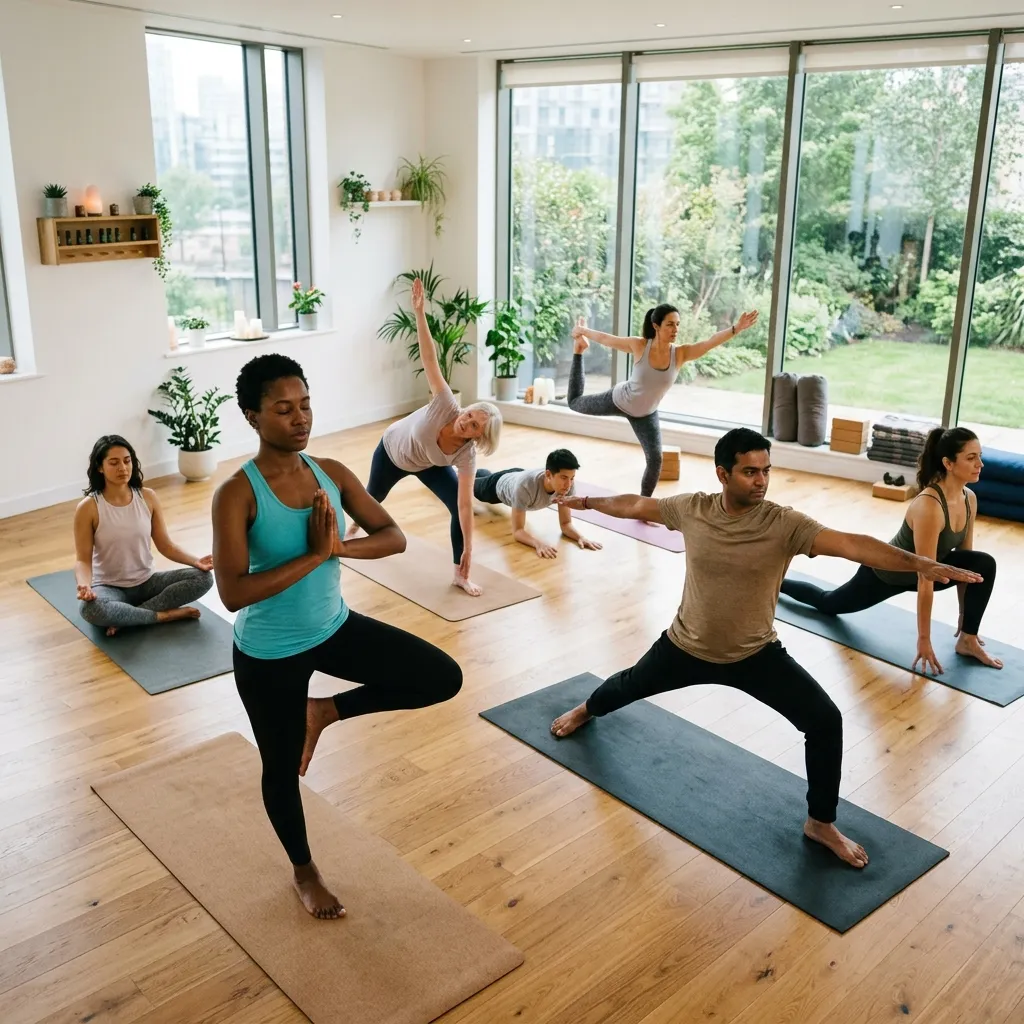
Yoga is far more than just a series of physical poses; it is an ancient, holistic system designed to cultivate harmony between the mind, the body, and the breath. At its core, it teaches self-awareness—the ability to observe your thoughts, emotions, and physical sensations without judgment. By systematically linking movement (asanas) with controlled breathing (pranayama), yoga helps calm the nervous system, reduce chronic stress, and improve overall mental clarity.
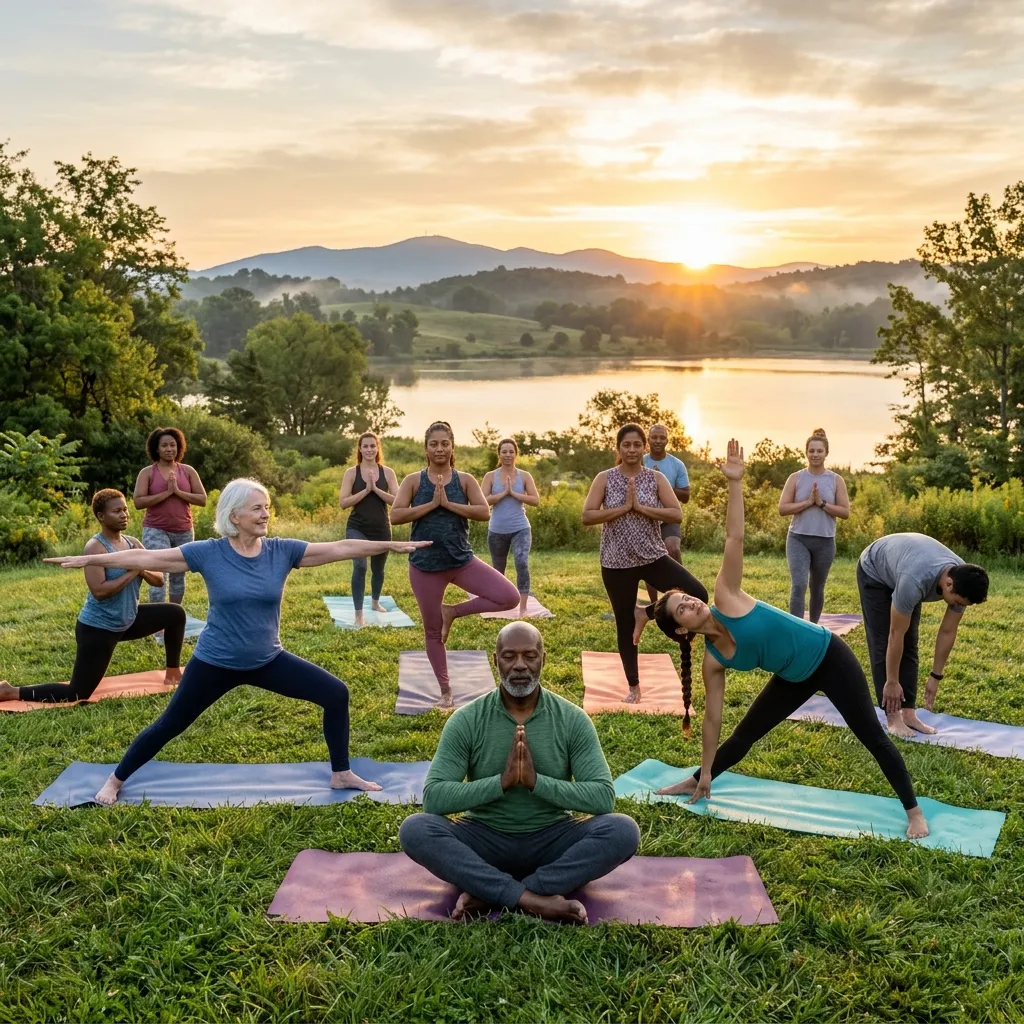
This practice is accessible to everyone, regardless of age, fitness level, or background. It offers a powerful pathway toward improving flexibility, building core strength, and achieving profound inner peace.
Why is Yoga Beneficial for Modern Life?
In our fast-paced world, chronic stress and physical stiffness are common complaints. Yoga provides targeted tools to counteract these issues by addressing both the physiological and psychological aspects of health.
Physical Benefits: Improving Body Function
Regular practice strengthens muscles that often become weak from prolonged sitting (like core stabilizers) and improves range of motion. Key physical benefits include:
- Increased Flexibility: Gentle stretching helps lengthen tight connective tissues, reducing stiffness in hips, hamstrings, and shoulders.
- Improved Posture: By making you aware of proper alignment, yoga counteracts the slouching associated with desk work.
- Enhanced Strength: Holding poses requires muscular endurance, building functional strength that supports daily activities.
Mental & Emotional Benefits: Stress Reduction
The most profound benefits often occur in the mind. Yoga is a form of moving meditation that trains you to stay present.
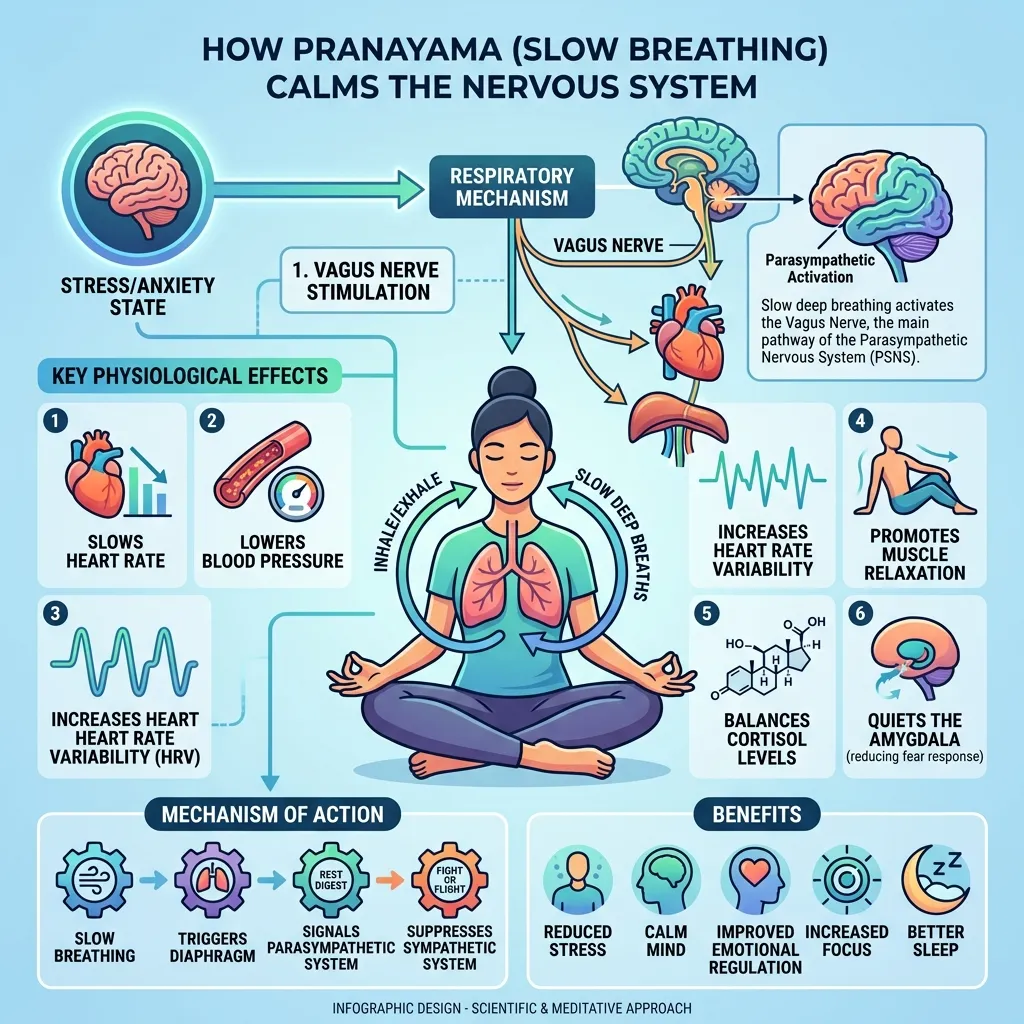
- Stress Management: By focusing intensely on the breath, yoga activates the parasympathetic nervous system, which signals the body to relax and counteracts the "fight or flight" stress response.
- Mindfulness: It teaches non-judgmental awareness of your internal state, helping you manage anxiety and emotional reactivity.
- Sleep Quality: The calming effect on the nervous system often leads to deeper, more restorative sleep patterns.
Is Yoga Really for Everyone? Debunking Common Myths
Many people hesitate to start yoga due to misconceptions about who it is for or what it entails. Understanding these myths can make starting your journey much easier.
Myth 1: You Must Be Flexible to Start
This is the most common barrier, but it’s completely false. Yoga is not a competition; it is a personal practice. The poses are designed to improve flexibility over time. Instead of focusing on how far you can stretch, focus on feeling the stretch and breathing into the sensation.
Tip for Beginners: Always use props like blocks or straps. These tools allow you to maintain proper alignment and deepen stretches safely without forcing your body.
Myth 2: Yoga is Only for Women
Yoga benefits all genders equally. For men, it can be a powerful tool for improving core strength, correcting poor posture from sitting, and managing stress through controlled breathwork. The practice is inherently inclusive.
Myth 3: Yoga Is a Religion
While yoga has deep philosophical roots in Hinduism, it is not a religion itself. It is a comprehensive system of self-discipline and physical movement that can be practiced for purely secular reasons—such as improving fitness or managing pain. You are free to engage with its philosophy or focus solely on the physical benefits.
Myth 4: All Yoga Styles Are the Same
The term "yoga" covers thousands of practices! Finding your style is key to consistency and enjoyment. Some popular styles include:
- Hatha Yoga: A foundational, slower-paced practice ideal for beginners, focusing on holding basic poses.
- Vinyasa Flow: Dynamic and continuous; links breath to movement in a flowing sequence. Excellent for building heat and cardiovascular fitness.
- Yin Yoga: Slow and meditative, holding deep stretches for 3–5 minutes to target the body's connective tissues (fascia). Highly restorative.
- Restorative Yoga: Uses many props (bolsters, blankets) to support the body in passive poses, maximizing relaxation and stress relief.
The Core Pillars: Connecting Mind, Body, and Breath
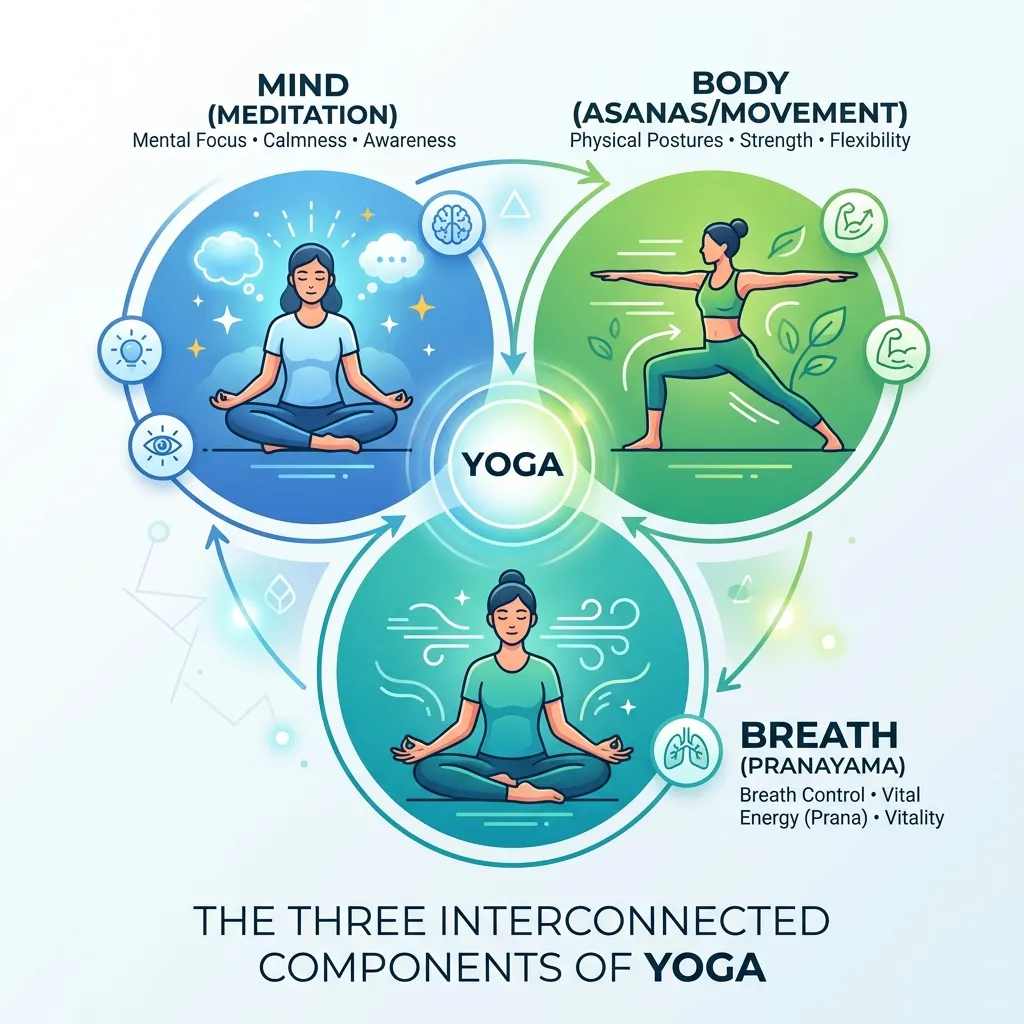
The true essence of yoga lies not in any single pose, but in the harmonious connection between its three pillars: Asana, Pranayama, and Dhyana.
Asanas (Physical Postures)
These are the physical movements. They build strength, improve balance, and increase body awareness. However, they are viewed as tools—a way to prepare the body for deeper mental work.
Pranayama (Breath Control)
This is arguably the most powerful tool in yoga. Pranayama refers to conscious breathwork. By controlling your inhale and exhale, you directly influence your autonomic nervous system. Slow, deep breathing signals safety to the brain, immediately lowering heart rate and blood pressure.
Dhyana (Meditation & Mindfulness)
This is the culmination of the practice. Meditation uses the physical poses and controlled breath as anchors to quiet the "monkey mind"—the constant stream of thoughts. It trains you to observe your thoughts without reacting to them, leading to profound mental calm.
Understanding Yoga's Philosophy: The Eight Limbs
The philosophical framework for yoga was codified by Patanjali in the Yoga Sutras. These guidelines provide a roadmap for self-realization, moving practitioners from physical discipline to ultimate mental clarity.
These eight limbs are not steps you must complete sequentially, but rather aspects of life that guide your practice:
- Yamas (Ethical Restraints): Guidelines for how we interact with the world. Examples include ahimsa (non-violence) and satya (truthfulness).
- Niyamas (Personal Observances): Internal disciplines focused on self-improvement, such as maintaining saucha (cleanliness) and practicing santosha (contentment).
- Asana (Physical Postures): The physical practice itself—the body's tool for discipline.
- Pranayama (Breath Control): Mastering the breath to control the mind.
- Pratyahara (Sense Withdrawal): Learning to detach from external stimuli and turn your focus inward.
- Dharana (Concentration): Focusing the mind on a single object, sound, or point of sensation.
- Dhyana (Meditation): Sustained concentration that leads to deep absorption and mental stillness.
- Samadhi (Enlightenment): The ultimate state of union and profound peace.
Getting Started: Practical Steps for Your Journey
Starting a yoga practice should feel empowering, not intimidating. Here are actionable steps to integrate yoga into your routine:
- Start Slow: Begin with gentle styles like Restorative Yoga or Hatha Yoga. Focus on the breath rather than the depth of the stretch.
- Listen to Your Body: Never push through sharp pain. Discomfort is normal; pain is a signal to stop.
- Consistency Over Intensity: A 15-minute practice done daily is far more beneficial than a two-hour session once a month.
- Find Qualified Guidance: Consider taking an introductory class with a teacher who emphasizes alignment and breathwork, not just acrobatics.
Summary & Next Steps
Yoga is a powerful, adaptable tool for improving physical health, managing stress, and cultivating deep self-awareness. By understanding that the practice connects your mind, body, and breath, you can move beyond viewing it as merely "stretchy poses." Embrace the journey of mindful movement and discover the profound peace waiting within.
Disclaimer: The information provided in this article is for general informational purposes only and is not intended as a substitute for professional medical advice, diagnosis, or treatment. Always seek the advice of your physician or other qualified health provider with any questions you may have regarding a medical condition or treatment.
Frequently Asked Questions
No. Yoga is designed to improve flexibility gradually. Focus on listening to your body and using props for support, rather than aiming for perfect poses.
No. While it has deep spiritual roots in ancient India, modern yoga is a physical and mental practice that can be adapted to any belief system or none at all.