Meal planning is the difference between keto success and frustration. Without a clear plan, it's easy to reach for convenient foods that are secretly high in carbs, unknowingly break ketosis, and give up within the first two weeks. A well-designed 7-day keto meal plan removes the guesswork and sets you up for a smooth, effective start.
What Does a Keto Meal Plan Include?
A properly structured keto meal plan keeps daily net carbs under 20–30 grams, while distributing the remaining calories across fat (65–75%) and protein (20–30%). Every meal should be built around a quality protein source and healthy fat, with low-carb vegetables for fiber and micronutrients.
A good keto meal plan also accounts for:
- Electrolytes: Sodium, potassium, and magnesium are depleted as insulin drops. Salt food generously and consider a magnesium supplement.
- Meal timing: Most keto followers do well with 3 meals per day or 2 meals plus 1 snack. Intermittent fasting pairs well with keto.
- Variety: Rotating protein sources and vegetables prevents nutrient gaps and flavor fatigue.
How Many Carbs, Fat, and Protein Per Day?
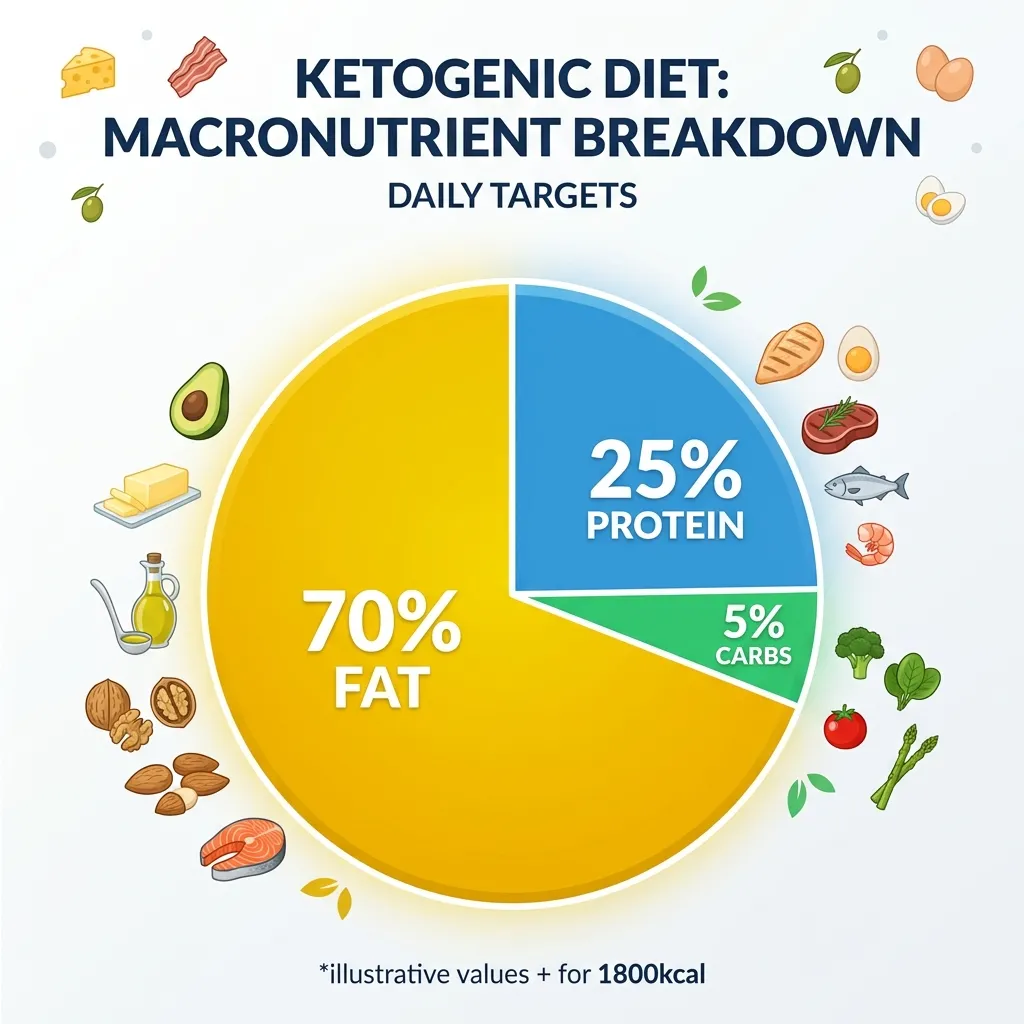
For a person with a daily calorie target of 1,800 calories on standard keto:
| Macro | Percentage | Grams |
|---|---|---|
| Fat | 70% | 140g |
| Protein | 25% | 113g |
| Net Carbs | 5% | 22g |
Use a keto macro calculator (entering your height, weight, activity level, and goal) to personalize these numbers. Protein is critical: too little leads to muscle loss, too much can impair ketosis through gluconeogenesis.
Sample 7-Day Keto Meal Plan
All meals target approximately 20–25g net carbs for the full day. Exact totals will vary by portion size.
Day 1
- Breakfast: 3 scrambled eggs cooked in butter with 2 strips of bacon, ½ avocado
- Lunch: Tuna salad (canned tuna, mayo, celery, pickles) served in romaine lettuce cups
- Dinner: Pan-seared salmon fillet with garlic butter, steamed broccoli with olive oil
- Snack: 1 oz sharp cheddar, 10 macadamia nuts
Day 2
- Breakfast: Keto smoothie — heavy cream, 1 cup unsweetened almond milk, 1 scoop unflavored collagen, 1 tbsp MCT oil, handful of spinach
- Lunch: Cobb salad — romaine, grilled chicken, hard-boiled egg, bacon, avocado, blue cheese, olive oil and vinegar
- Dinner: Bunless grass-fed beef burgers with cheese, lettuce, tomato, and a side of sautéed zucchini
- Snack: Celery sticks with almond butter
Day 3
- Breakfast: Veggie omelet (3 eggs, spinach, mushrooms, bell pepper) with 1 tbsp butter
- Lunch: Chicken Caesar salad (no croutons) with full-fat Caesar dressing
- Dinner: Pork belly with roasted bok choy and sesame oil
- Snack: Hard-boiled egg, ¼ cup almonds
Day 4
- Breakfast: Full-fat Greek yogurt (plain, unsweetened) with 10 raspberries and crushed walnuts
- Lunch: Egg salad stuffed in hollowed-out bell pepper halves
- Dinner: Shrimp stir-fry with zucchini noodles, garlic, and olive oil
- Snack: 1 oz cheese, 3–4 slices pepperoni
Day 5
- Breakfast: Keto "bread" toast (almond flour base) with cream cheese and 2 fried eggs
- Lunch: BLT salad — romaine, bacon, tomato, avocado, mayo dressing
- Dinner: Baked chicken thighs with garlic herb butter, roasted asparagus
- Snack: Pork rinds with guacamole (2 tbsp)
Day 6
- Breakfast: Bacon and egg breakfast cups (baked in muffin tin with cheese)
- Lunch: Greek salad with grilled chicken, feta, olives, cucumber, olive oil and lemon
- Dinner: Lamb chops with roasted Brussels sprouts drizzled with bacon fat
- Snack: Cucumber slices with cream cheese and smoked salmon
Day 7
- Breakfast: Keto pancakes (almond flour, eggs, cream cheese, vanilla extract) with sugar-free whipped cream and a few blueberries
- Lunch: Turkey and avocado lettuce wraps with cream cheese and cucumber
- Dinner: Slow-cooker beef short ribs with cauliflower mash and steamed green beans
- Snack: Mixed nuts (macadamia, pecan, walnuts), 1 square of 85%+ dark chocolate
Keto-Friendly Snack Ideas
When hunger strikes between meals, these snacks stay under 3–5g net carbs:
- Hard-boiled eggs
- Cheese cubes or string cheese
- Macadamia nuts or pecans
- Celery with almond or peanut butter
- Cucumber with cream cheese
- Pork rinds and guacamole
- Olives
- Deli turkey slices wrapped around cheese
- 85%+ dark chocolate (1–2 squares)
How to Meal Prep for Keto
Successful keto meal prep follows a simple structure:
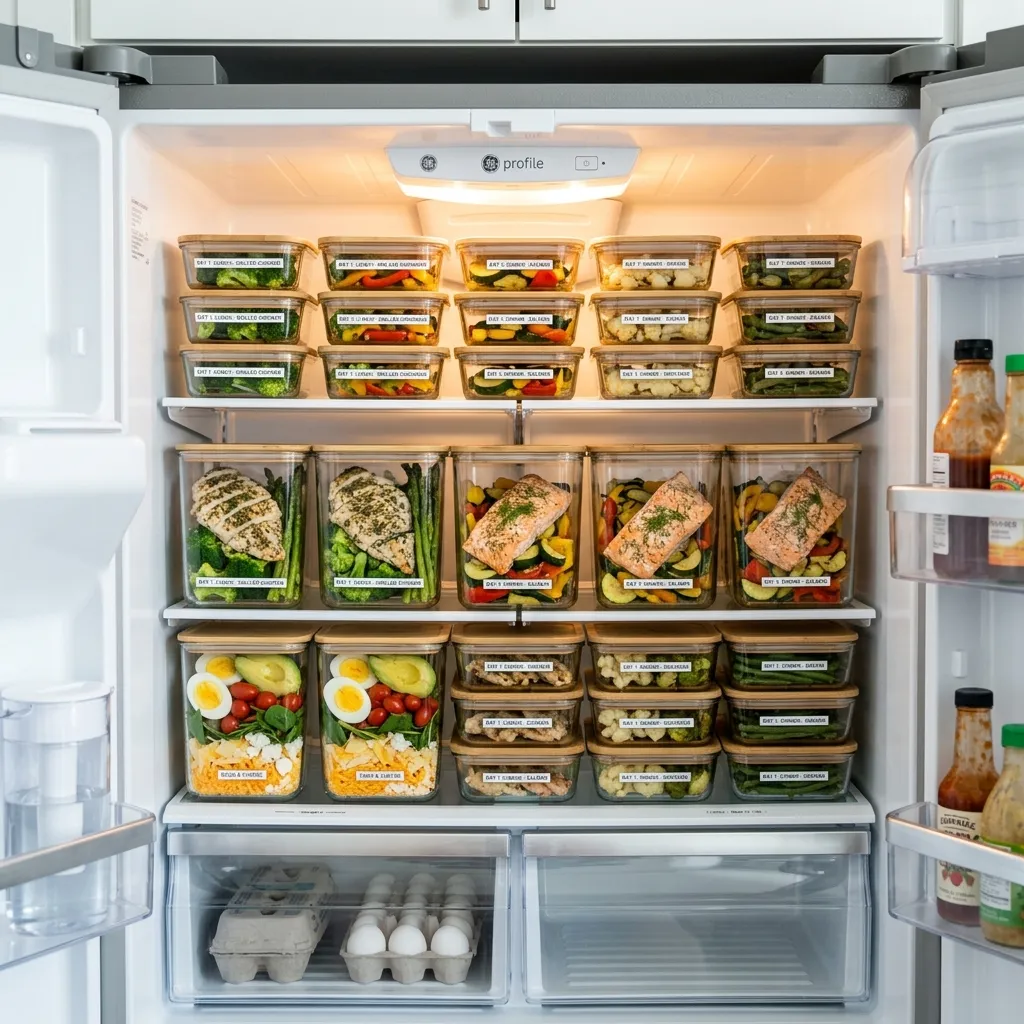
- Batch cook proteins on Sunday: Grill or bake chicken thighs, hard-boil eggs, cook ground beef, and portion salmon fillets.
- Pre-wash and chop vegetables: Store ready-to-use spinach, broccoli florets, sliced zucchini, and chopped bell peppers in containers.
- Make fat bombs or snacks in advance: Prepare cheese bites, fat bomb energy balls (coconut oil, almond butter, cocoa), or portion out nuts into snack bags.
- Prepare keto-friendly dressings: Caesar, ranch, and olive oil-based dressings stay fresh for 5–7 days in the fridge.
- Use a macro tracker for the first 4 weeks: Apps like Cronometer or Carb Manager help you stay within keto ratios until you build intuition.
Common Meal-Planning Mistakes
- Not tracking "hidden" carbs: Many condiments, sauces, and packaged foods contain 2–5g of carbs per serving. These add up quickly. Check labels obsessively at first.
- Eating too little protein: Aiming too low on protein (under 0.8g/lb body weight) leads to muscle breakdown, especially during weight loss.
- Neglecting vegetables entirely: Some beginners cut all carbs including low-carb vegetables. This leads to fiber deficiency, constipation, and micronutrient gaps.
- Not planning for social situations: Having a keto strategy for restaurants and social meals prevents derailments. Grilled proteins and salads work almost everywhere.
- Relying on keto-labeled processed foods: Many keto snack bars, cookies, and products have high calorie counts and low nutrient density. Real, whole keto foods produce better results.
A structured 7-day keto meal plan dramatically reduces the mental load of maintaining ketosis. Once you build familiarity with keto-friendly foods and your personal macro targets, meal planning becomes intuitive — and the benefits of keto become sustainable for the long term.