"Eat a balanced diet" is probably the most common piece of nutrition advice in existence — yet very few people can clearly define what a balanced diet actually looks like, how many calories it contains, or which specific foods it includes. This guide breaks it down with practical clarity.
What Is a Balanced Diet?
A balanced diet is an eating pattern that provides all essential macronutrients (carbohydrates, protein, and fat) and micronutrients (vitamins and minerals) in amounts sufficient to support health, energy, and well-being — without consistently exceeding energy needs.
The word "balanced" is key. It doesn't mean eating equal amounts of each food group, nor does it mean eliminating any particular food. A balanced diet:
- Supplies adequate calories to fuel your body and maintain a healthy weight
- Provides a full spectrum of nutrients that work synergistically
- Is sustainable and enjoyable — not a short-term restriction
- Leaves room for flexibility and social eating
No single food makes a diet balanced or unbalanced. It's the overall pattern, across days and weeks, that matters.
What Food Groups Should You Include?
A balanced diet draws from all major food groups in appropriate proportions:
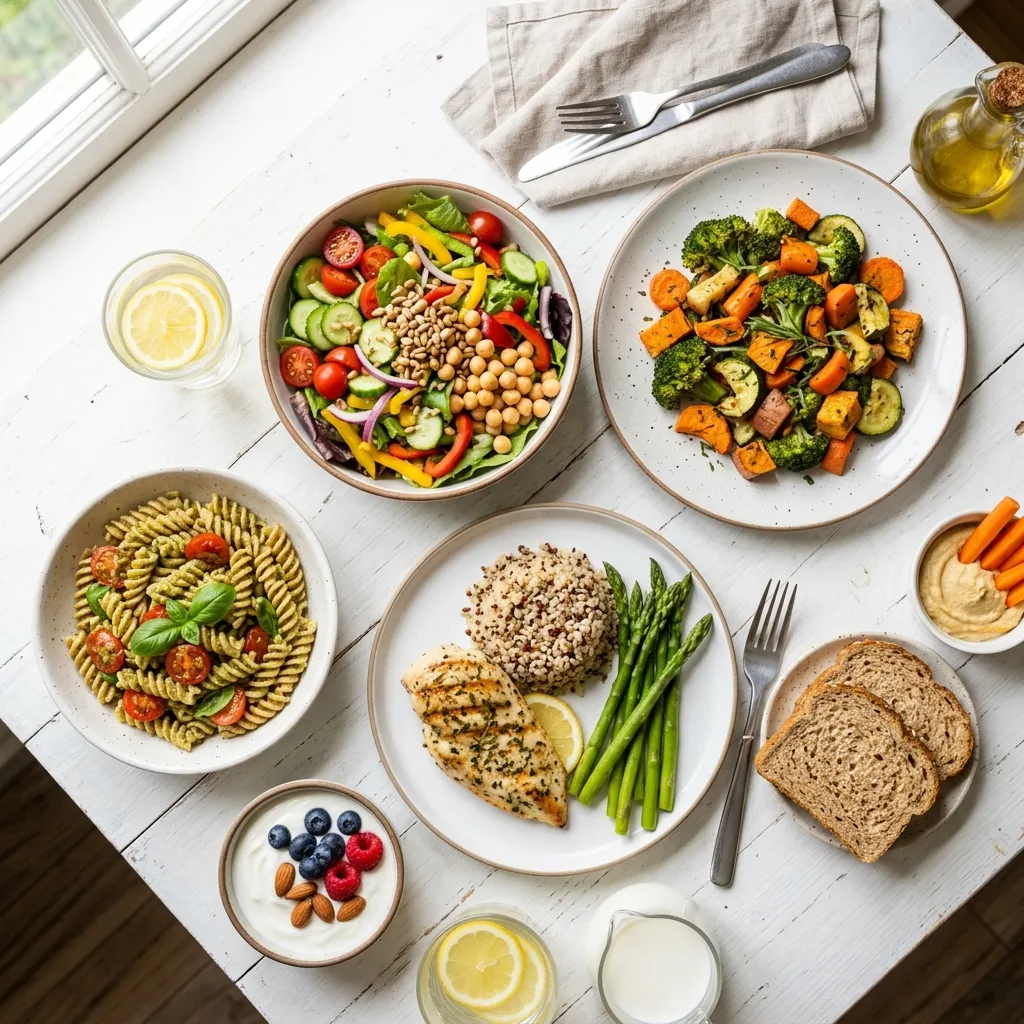
1. Vegetables and Fruits Make up the largest portion of a balanced diet. Rich in fiber, vitamins, minerals, antioxidants, and phytonutrients. Aim for variety and color — different colors indicate different beneficial compounds.
2. Whole Grains Brown rice, oats, quinoa, whole wheat pasta, and whole grain bread provide complex carbohydrates, B vitamins, and sustained energy. Choose whole grain versions over refined whenever possible.
3. Lean Proteins Chicken, fish, eggs, legumes, tofu, and low-fat dairy provide essential amino acids for muscle repair, hormone production, and immune function.
4. Healthy Fats Avocado, olive oil, nuts, seeds, and fatty fish provide essential fatty acids, fat-soluble vitamins (A, D, E, K), and support brain and hormone health.
5. Dairy or Dairy Alternatives Low-fat dairy or fortified plant milks provide calcium, vitamin D, and protein. Important for bone density, especially in children and older adults.
6. Water Often overlooked as a "food group," hydration is foundational. Aim for 8–10 cups (2–2.5L) per day, adjusted for activity and climate.
What Does a Balanced Plate Look Like?
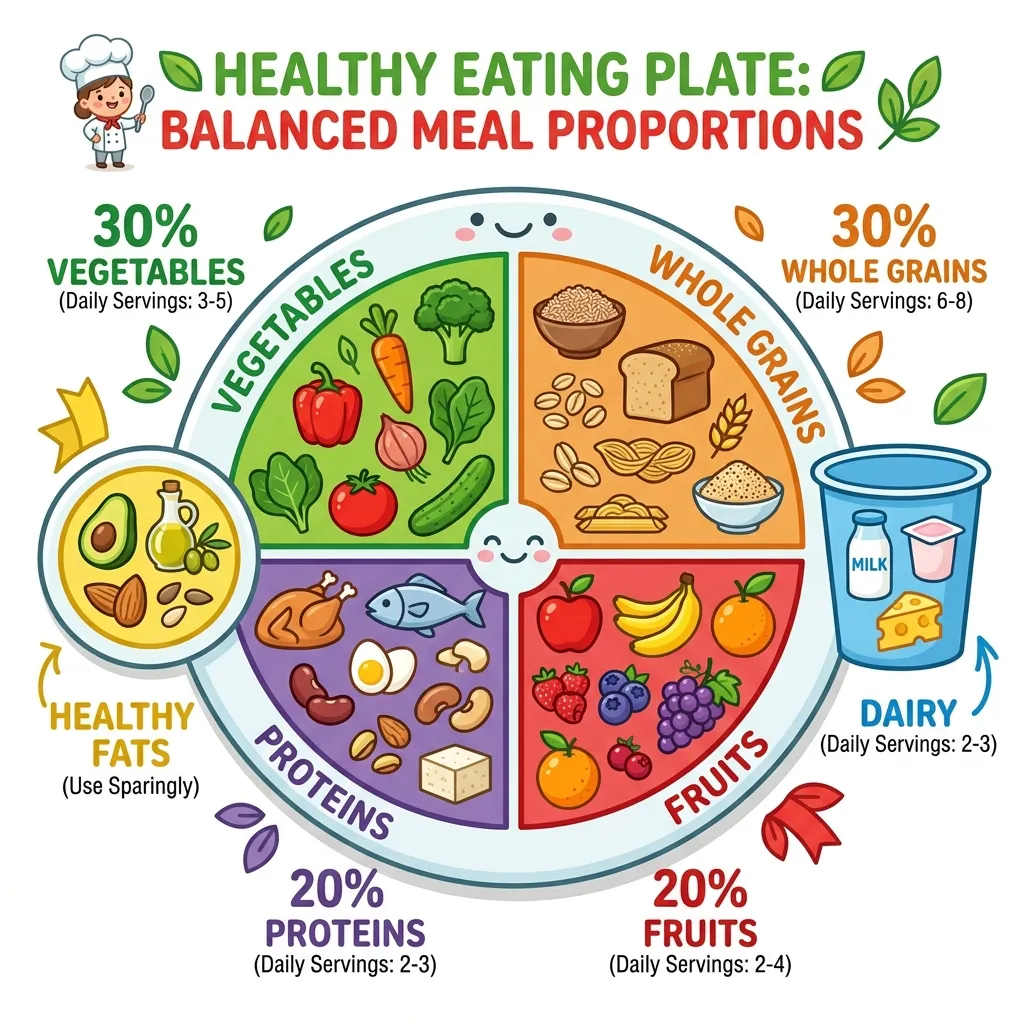
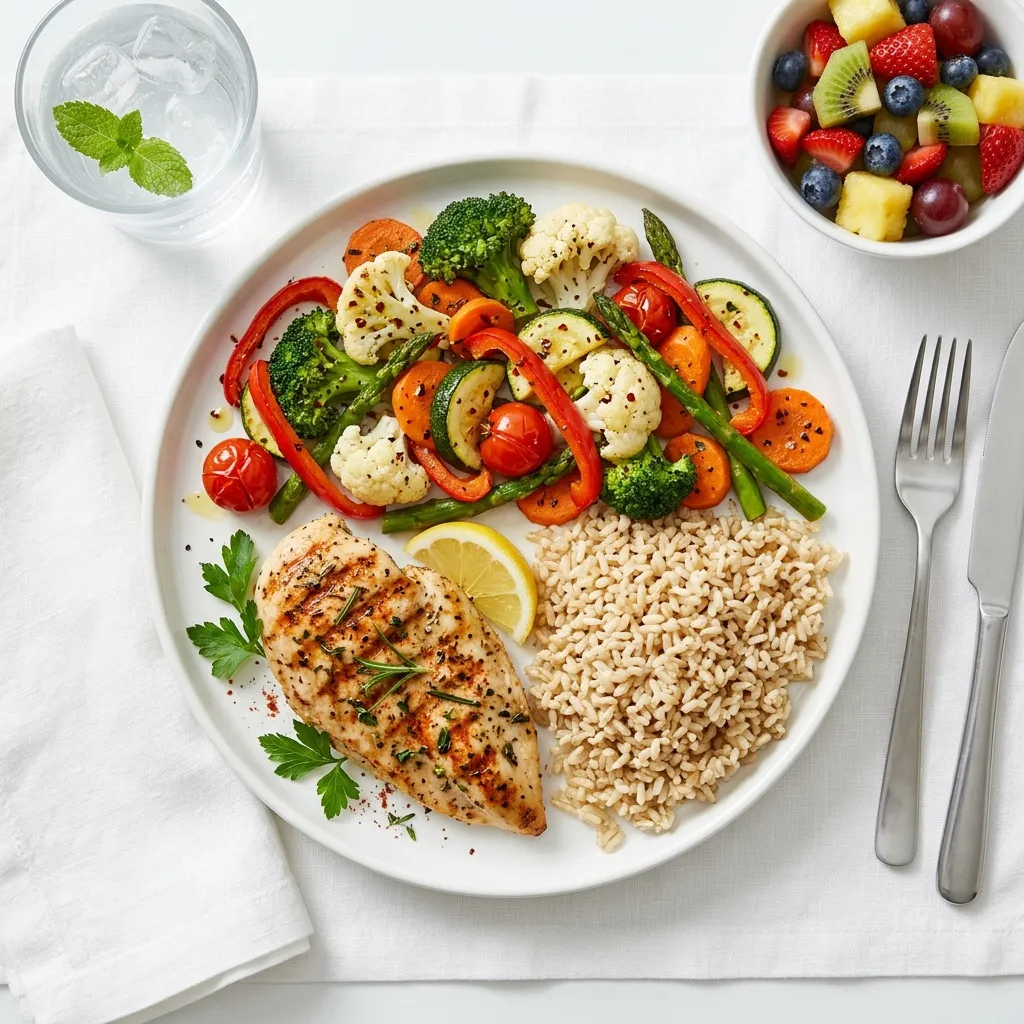
The most widely recommended model for building a balanced plate is the Healthy Plate framework (developed by Harvard T.H. Chan School of Public Health):
| Section | What Goes Here | Proportion |
|---|---|---|
| Vegetables | Non-starchy vegetables (greens, broccoli, tomatoes, peppers) | 50% of plate |
| Whole Grains | Brown rice, quinoa, whole grain pasta or bread | 25% of plate |
| Lean Protein | Chicken, fish, legumes, eggs, tofu | 25% of plate |
| Healthy Fat | Small amount of olive oil, avocado, or nuts | Condiment/side |
| Fruit | As a side or dessert | Separate small portion |
| Water/beverage | Water, unsweetened tea, or coffee | With meal |
This model is a starting point, not a rigid rule. Adjust proportions based on activity level, health goals, and personal dietary needs.
How Many Calories Is a Balanced Diet?
Caloric needs vary significantly by age, sex, height, weight, and activity level. General ranges for a maintenance-level balanced diet:
| Group | Approximate Daily Calories |
|---|---|
| Sedentary women | 1,600–2,000 kcal |
| Active women | 2,000–2,400 kcal |
| Sedentary men | 2,000–2,400 kcal |
| Active men | 2,400–3,000 kcal |
| Children (6–12 years) | 1,400–2,200 kcal |
| Older adults (65+) | 1,600–2,200 kcal |
These are estimates. For a personalized target, use the Mifflin-St Jeor equation (widely considered the most accurate for most people) or consult a registered dietitian.
Sample Balanced Meal Plan
Monday:
- Breakfast: Oatmeal with sliced banana, walnuts, and a drizzle of honey, glass of low-fat milk
- Lunch: Whole grain wrap with grilled chicken, spinach, avocado, tomato, and hummus
- Dinner: Baked salmon, roasted broccoli and sweet potatoes, small whole grain roll
- Snack: Apple with a small handful of almonds
Tuesday:
- Breakfast: 2 scrambled eggs, whole grain toast, sliced orange
- Lunch: Lentil soup with crusty whole grain bread and a side salad
- Dinner: Stir-fried tofu with mixed vegetables and brown rice
- Snack: Greek yogurt with berries
Wednesday:
- Breakfast: Smoothie with spinach, banana, low-fat yogurt, oats, and berries
- Lunch: Tuna Nicoise salad with egg, green beans, olives, and olive oil dressing
- Dinner: Chicken breast, roasted vegetables (peppers, zucchini, red onion), quinoa
- Snack: Carrot sticks and hummus
Common Balanced-Diet Myths
Myth 1: "Carbs make you fat" Carbohydrates are not inherently fattening. Excess total calories cause weight gain. Whole grain carbohydrates are associated with lower body weight and reduced chronic disease risk in large-scale studies.
Myth 2: "Fat should be avoided" Dietary fat is essential for hormone production, brain function, and the absorption of fat-soluble vitamins. The type of fat matters far more than the total amount. Unsaturated fats from olive oil, avocado, and nuts are actively health-promoting.
Myth 3: "You need to eat every 2–3 hours to keep your metabolism fast" Meal frequency has minimal impact on metabolic rate. Total daily caloric intake and overall food quality matter far more than how often you eat.
Myth 4: "A balanced diet means equal amounts of each food group" Vegetables should form the largest portion of a balanced diet — not an equal share. Fats, while essential, are calorie-dense and should be used in moderation.
Myth 5: "Supplements can replace a balanced diet" Supplements address specific nutrient gaps — they cannot replicate the complex matrix of fiber, phytonutrients, and synergistic compounds found in whole foods. A supplement habit is not a substitute for dietary quality.
A balanced diet doesn't require perfection — it requires consistency. The cumulative impact of making predominantly nutritious choices across hundreds of meals each year is what produces lasting health outcomes. Small, sustainable improvements to your current eating pattern will always outperform extreme dietary approaches that you can only maintain for a few weeks.